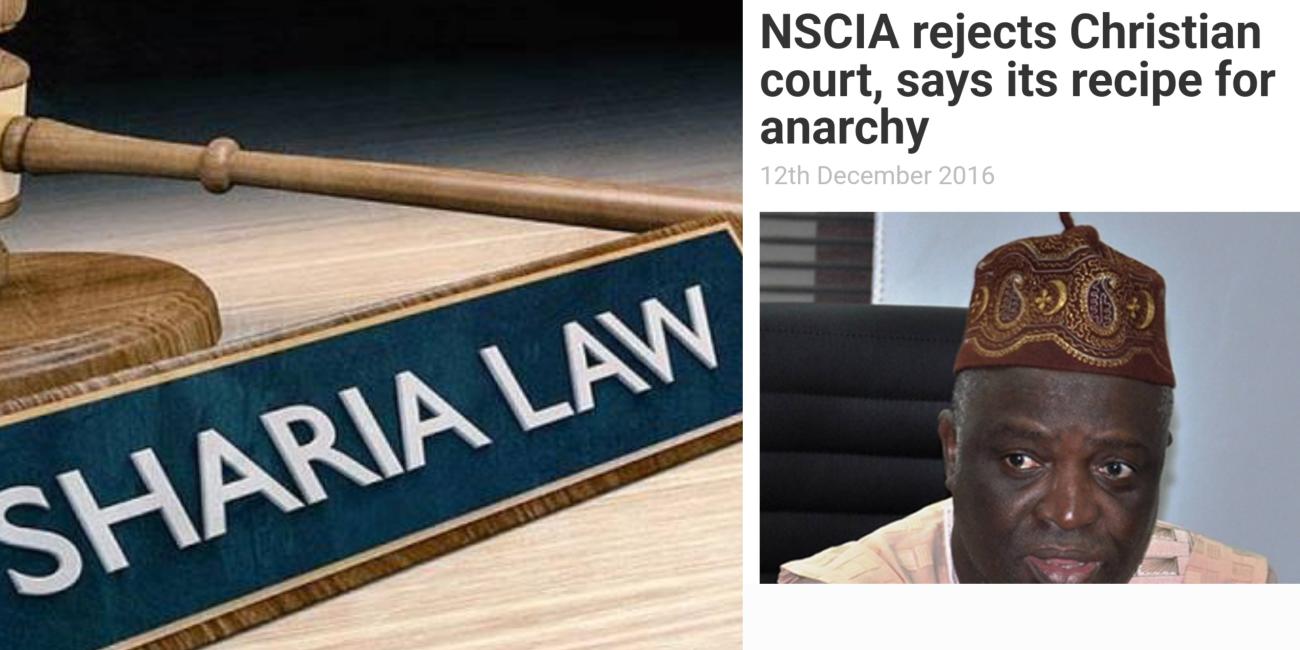
A fresh controversy has erupted in Nigeria over the proposed establishment of Sharia courts in the South-West, reigniting debates on religious tolerance and legal pluralism. The Nigerian Supreme Council for Islamic Affairs (NSCIA), led by the Sultan of Sokoto, Alhaji Muhammad Sa’ad Abubakar, has condemned opposition to the initiative, attributing the backlash to “intolerance.”
In a statement titled “Live and Let Live!” and signed by its Deputy National Legal Adviser, Haroun Muhammed, the NSCIA decried what it called the “high spate of intolerance and disregard for the rights of Muslims, especially in the Southern part of the country.” The organization insisted that the proposed Sharia Arbitration Panel in Ekiti and Oyo States is purely a voluntary dispute resolution mechanism for Muslims, emphasizing that resistance to it is “unnecessary and unwarranted.”
However, a striking contradiction has emerged. In 2016, the same NSCIA vehemently opposed a Bill for Ecclesiastical (Christian) Courts in Nigeria. The bill, sponsored by Hon. Gyang Dung from Plateau State, had passed its second reading and sought to establish courts that would adjudicate matters based on Christian tenets.
At the time, the NSCIA’s Secretary-General and current Registrar of the Joint Admissions and Matriculations Board (JAMB), Prof. Is-haq Oloyede, dismissed the move as a “recipe for anarchy.” In an interview with PUNCH Newspaper, he argued that introducing Christian courts would create unnecessary religious tension, warning that “if because somebody has something, then another person must have it, then Muslims can also demand Wednesday as a public holiday instead of Sunday.”
Oloyede further stated that the call for Christian courts was driven by “intolerance” and cautioned against a tit-for-tat approach, claiming that such demands would only deepen religious divisions. “If you start this intolerance, at the end of the day, every group will discover that it does not pay,” he asserted.
His remarks went further, highlighting the existing Christian symbols in public institutions, such as the use of the cross in hospitals, which, he claimed, Muslims have accepted without complaints. He warned that any move to introduce Christian courts could provoke counter-demands from Muslims, potentially destabilizing the nation.
The resurfacing of the NSCIA’s 2016 position has sparked a heated debate, with critics accusing the group of hypocrisy. Many question why a body that once opposed Christian courts on grounds of national unity and religious sensitivity is now championing Sharia courts in the South-West under the banner of religious rights.
As the debate intensifies, Nigerians are left pondering: Is this a case of selective advocacy, or is there a deeper issue of systemic religious imbalance at play?
 PIONEER NEWS