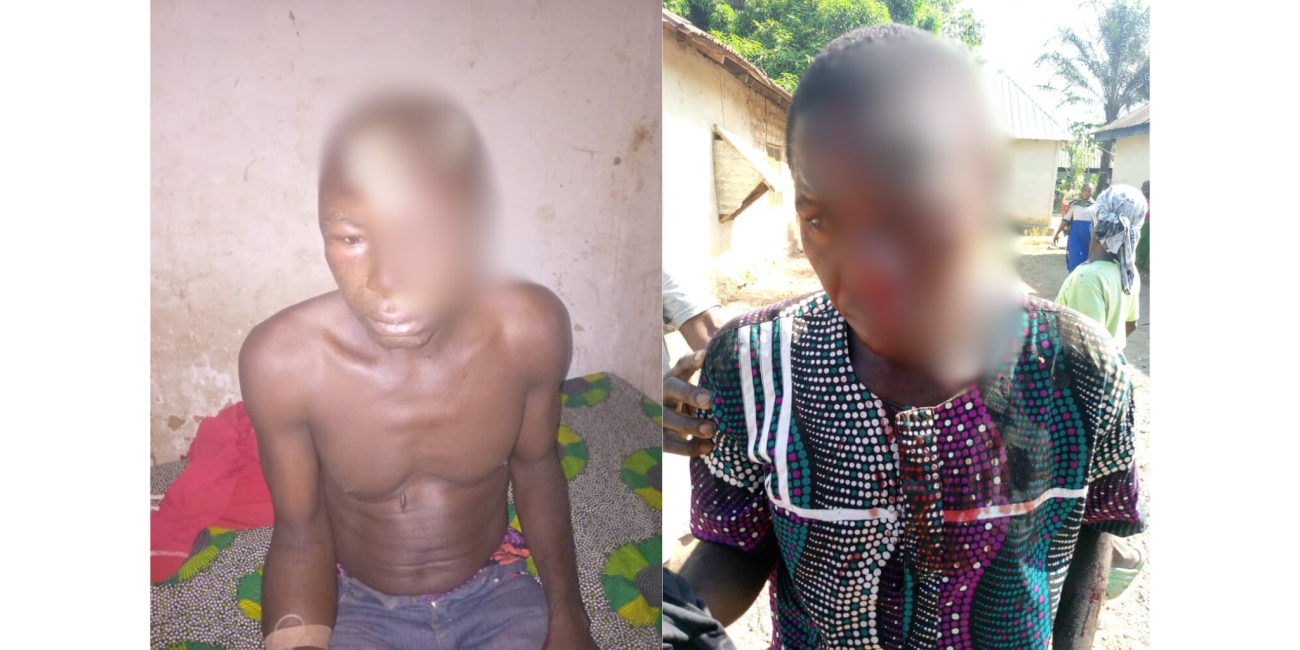
In a shocking and unsettling development in Takum Local Government Area of Taraba State, Sahara Reporters has taken to it’s official X handle and announced that a deaf man and three other victims were not only assaulted by a violent mob but were subsequently arrested by the police. The victims, including Ikpeasan Abaga, were brutalized by thugs protesting over territorial disputes, only to find themselves detained, extorted, and denied justice by the very authorities meant to protect them.
On December 12, 2024, a group of thugs launched a vicious attack on Ikpeasan Abaga and three others—Kuru Adamu, Micah Lena, and Ikpe Bako—who had been caught in the crossfire of a violent protest in Barikin-lissa. The assailants, enraged by a territorial boundary dispute, used machetes and clubs to assault the victims, leaving them severely injured. Ikpeasan Abaga, a deaf man, was reportedly beaten into unconsciousness and remained unresponsive for a shocking 24 hours.
Douglas Abaga, Ikpeasan’s brother, shared the harrowing details with Sahara Reporters. “My brother was on a routine immunisation visit when the hooligans descended on him with clubs and machetes. He was beaten senseless and left unconscious for almost an entire day,” he said, his voice heavy with the pain of seeing his sibling suffer in such a brutal and senseless attack.
Despite the severity of the assault, the response from the local police was nothing short of outrageous. While the perpetrators had either fled or been arrested by local authorities, a higher-level intervention soon threw the case into turmoil. In a move that stunned the community, key local figures—including Barr. Sopiya Ahmadu Gboshi, the paramount ruler of Takum, and influential politicians like Takum II lawmaker John Lamba and local chairman John Ali Danjuma—intervened in the case, pushing for an out-of-court settlement for the rioters.
A police officer, speaking under the condition of anonymity, confirmed to Sahara Reporters that they had been prepared to charge the rioters with inciting violence and disturbing the peace, as ordered by the Commissioner of Police. However, due to the high-level intervention, the police agreed to an alternative dispute resolution, whereby the rioters would compensate for any damages caused by their actions.
As part of this arrangement, the hooligans made an initial payment of N1.2 million to cover property damages. However, this supposed resolution quickly turned into a nightmare for the victims and their advocates. In a dramatic turn, armed officers from the State Criminal Investigation Department (CID), allegedly acting under the direction of DC Zango, stormed the town. The CID officers bypassed the local police, seized the victims, and unlawfully arrested both the victims and the councillor who had helped mediate the peace agreement.
The victims—already traumatized by the violent assault—found themselves locked behind bars, facing yet another injustice. “We had to cough up N300,000 to be allowed to return home,” said Zaure, the Shibong Ward Councillor, who was also detained. The arbitrary and corrupt nature of the detention was made worse when it was revealed that the officers had also collected the N1.2 million compensation money from Zaure’s custody, further compounding the growing sense of injustice.
SP Usman Abdullahi, spokesperson for the Taraba State Police Command, confirmed the arrests on January 18, 2025, but claimed they were made in response to a “life-threatening petition to the Commissioner of Police” by the suspects. However, he denied knowledge of any financial transactions related to the N1.2 million compensation money or the N300,000 extorted from the victims for their release.
This case highlights the deep-rooted issues of police corruption, abuse of power, and a lack of accountability within the Nigerian justice system. The arbitrary arrest and extortion of innocent citizens, including a deaf victim, underscores the pressing need for reform and better oversight in law enforcement agencies across the country.
As the investigation into these incidents continues, questions remain: will the authorities take responsibility for the corruption and mistreatment of the victims, or will this case simply become another statistic in the growing list of police misconduct in Nigeria? The residents of Takum—and indeed the wider public—are waiting for answers, and justice remains a distant hope for those who have suffered at the hands of those meant to protect them.
 PIONEER NEWS