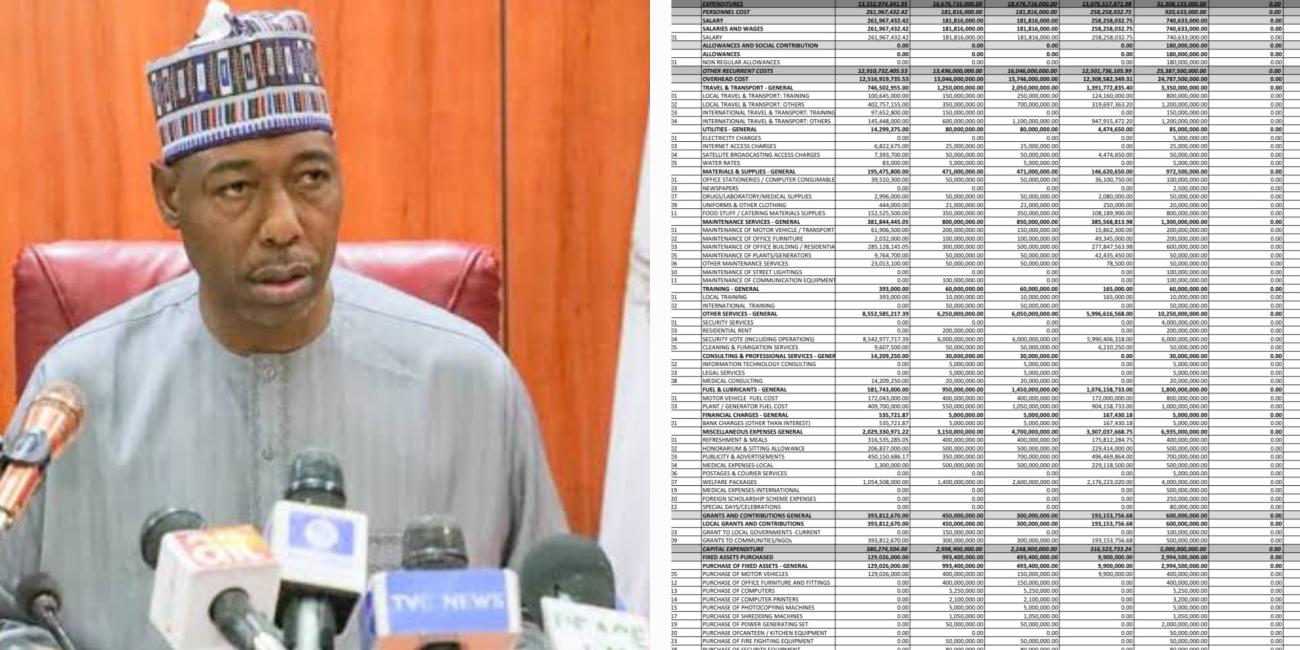
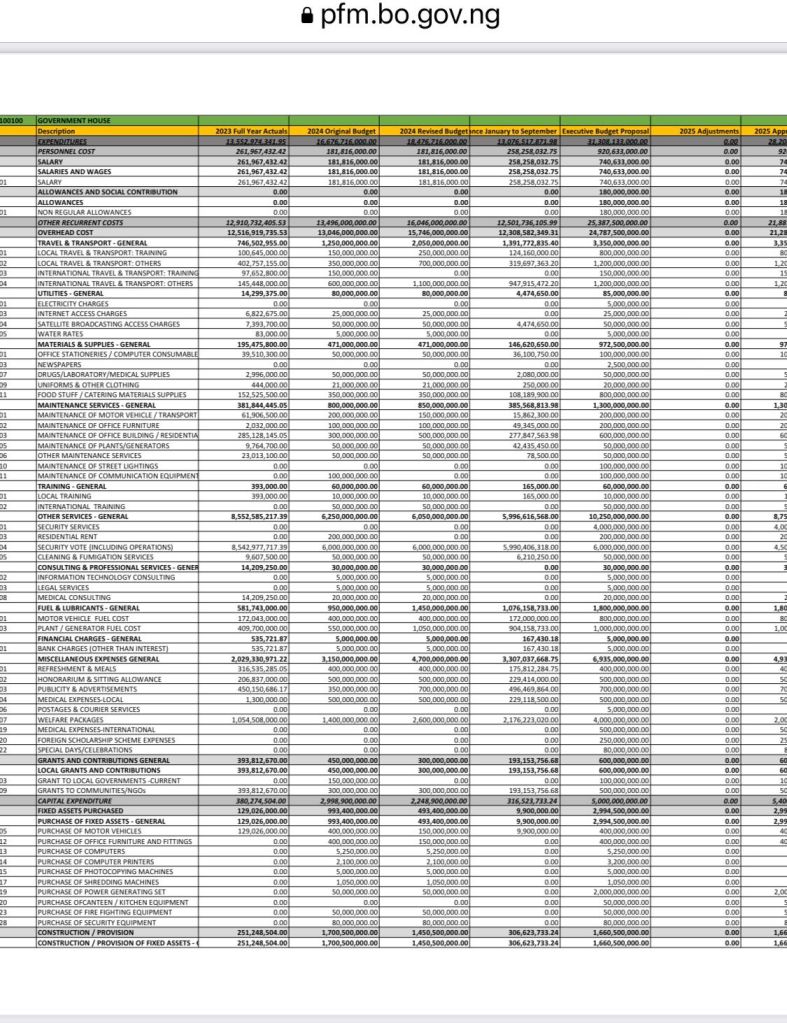
SaharaReporters has recently highlighted a shocking allocation in the Borno State government’s 2025 budget, drawing attention to the N2 billion set aside for the purchase of power generators. The budget, which was approved after a thorough review, reveals an eyebrow-raising allocation of N1 billion solely for fueling these generators. This amounts to roughly N83.3 million per month, or an astonishing N2.7 million per day, assuming a 30-day month.
At an average fuel cost of N1,000 per litre, this budget implies a staggering daily consumption of 2,777 litres of fuel just to keep the generators running.
The allocation for power generation is not the only area of concern. The government has also earmarked an additional N800 million for fueling motor vehicles in the upcoming fiscal year. The breakdown further reveals that a combined total of N1.3 billion has been set aside for various expenses, including N400 million for office refreshments, meals, and sitting allowances for government officials. Another N400 million is allocated for motor vehicles within the Government House, with an additional N400 million for office furniture and fittings, alongside N50 million for canteen and kitchen equipment.
In a further blow to public perception, the Office of the Secretary to the State Government has allocated N1 billion for office furniture and fittings in 2025. These hefty allocations come despite the stark reality that the state is battling widespread poverty, with over 900,000 residents living in hardship.
The irony of these lavish expenditures becomes more apparent when compared with the state’s grim socio-economic indicators. Approximately 48% of school-age children in Borno lack access to education, and 47% are deprived of proper sanitation facilities. The state’s residents continue to endure the consequences of persistent insecurity, which has led to the loss of countless lives and properties.
Governor Babagana Zulum, who has frequently voiced concerns about declining revenue, now faces intense scrutiny for approving such extravagant allocations. Critics argue that the priority should be to address the pressing needs of the people, especially in the face of the state’s economic struggles and worsening humanitarian crisis.
As Borno continues to grapple with these challenges, the government’s proposed spending raises crucial questions about the priorities of leadership in a state with such stark socio-economic disparities. Will these lavish allocations truly benefit the people, or is this yet another example of misplaced priorities? Only time will tell.
 PIONEER NEWS