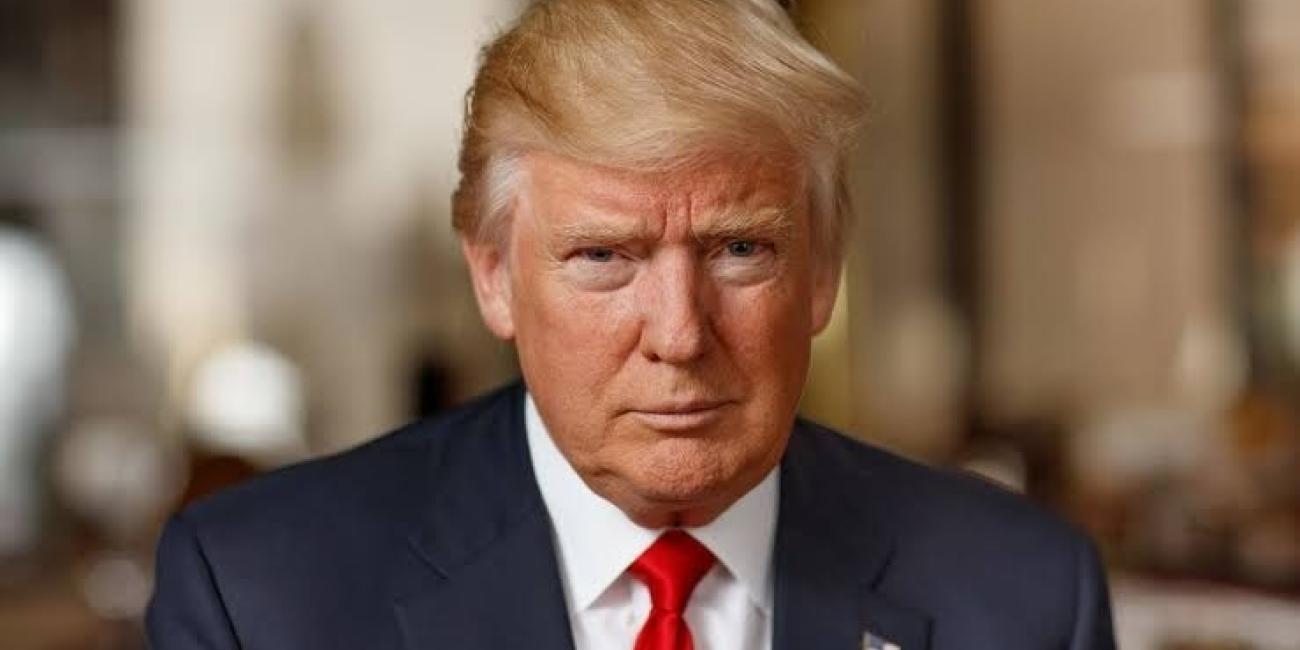
The United States is reeling from a catastrophic mid-air collision between a commercial airliner and a military helicopter near Washington, D.C., with President Donald Trump confirming the grim reality—no survivors.
The tragic accident occurred on Wednesday evening when an H-60 Black Hawk helicopter collided with American Airlines Flight 5342 as it was making its final approach to Ronald Reagan Washington National Airport. The devastating impact sent both aircraft plunging into the icy Potomac River, claiming the lives of all 67 individuals on board—64 passengers and crew from the jet and three military personnel from the helicopter.
Addressing the press, President Trump described the crash as “an hour of anguish for our nation” and a “real tragedy.” He confirmed that an extensive search and rescue operation had transitioned into a full-scale recovery mission, with nearly 300 emergency responders combing through the wreckage.
“Sadly, there are no survivors,” Trump stated solemnly. “As one nation, we grieve for every precious soul that has been taken from us so suddenly.”
Expressing frustration over what he suggested might be a preventable disaster, Trump openly questioned the actions of air traffic controllers and the helicopter crew.
“It was a clear night, the lights on the plane were blazing—why didn’t the helicopter go up or down, or turn?” Trump posted on Truth Social early Thursday morning.
The president also criticized airport authorities, suggesting possible negligence in directing air traffic.
“This is a bad situation that looks like it should have been prevented. NOT GOOD!!!” he added.
Fatal Collision: A Timeline of Tragedy
At approximately 9:00 PM local time, Flight 5342—a Bombardier CRJ700 operated by PSA Airlines, a subsidiary of American Airlines—was on its final descent toward Runway 33. The aircraft, which had departed from Wichita, Kansas, carried 60 passengers and four crew members, including several prominent athletes, coaches, and family members returning from the U.S. Figure Skating Championships.
At the same time, a U.S. Army Black Hawk helicopter conducting routine training entered the jet’s flight path over the Potomac River. Within seconds, the two aircraft collided mid-air, breaking apart on impact and crashing into the frigid waters below.
Despite clear weather conditions—16km visibility, northwest winds, and a temperature of 10°C—parts of the Potomac River remained frozen from a recent cold snap, complicating rescue efforts.
The Federal Aviation Administration (FAA) and National Transportation Safety Board (NTSB) have launched a full-scale investigation into the disaster, seeking answers to how such a catastrophic failure in airspace coordination could have occurred.
Meanwhile, the nation mourns. President Trump, alongside First Lady Melania Trump, extended deep condolences to the victims’ families, vowing to ensure that such a tragedy never happens again.
“We do not know what led to this crash, but we have some very strong opinions and ideas,” Trump stated. “We will get to the bottom of it.”
As the world watches, questions of accountability, airspace safety, and aviation protocol loom large, while grieving families struggle to come to terms with a night that should have ended in safe landings—but instead, ended in disaster.
 PIONEER NEWS