Despite Government Ban, Illegal Mining Thrives in Bauchi as Children Swap Books for Mining Buckets
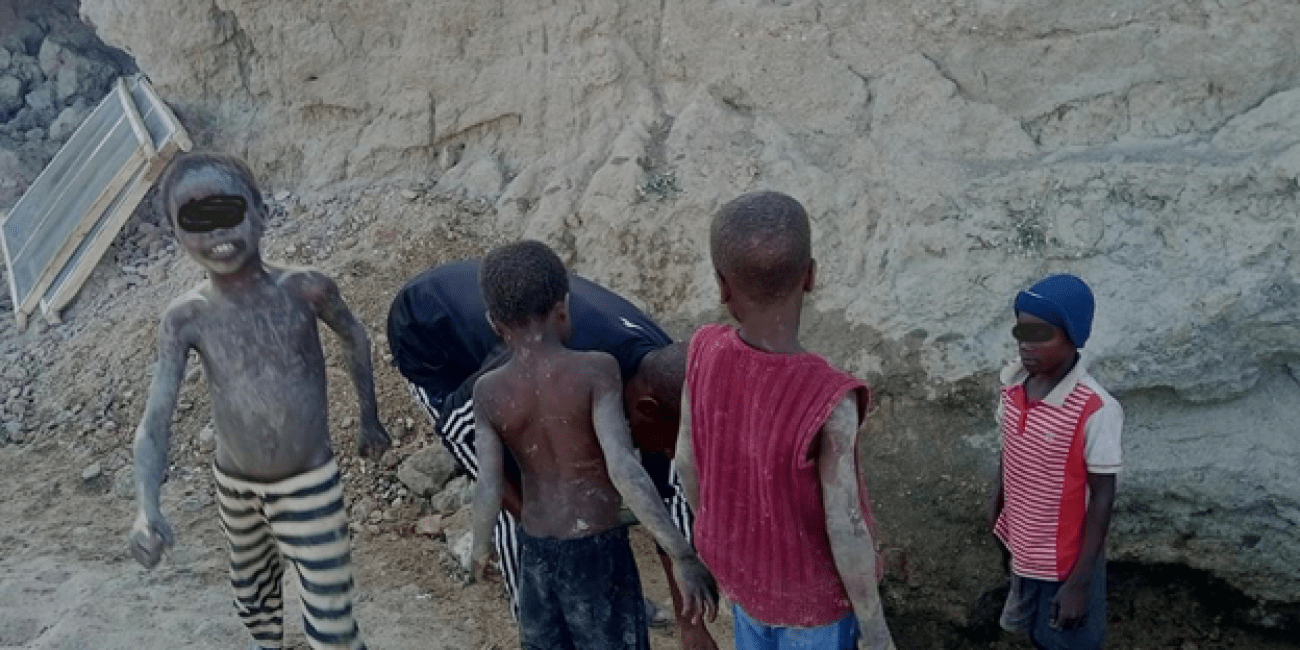
In the heart of Bauchi State, where the golden shimmer of sand conceals a deeper poverty, the harsh realities of illegal mining are vividly playing out. Against a backdrop of abandoned classrooms and shattered dreams, children like 12-year-old Sulaiman are thrust into adulthood far too early, trading education for survival in the unyielding sands of Jirr mining site, just 25 kilometers from the state capital.
Under the scorching sun, Sulaiman balances a bucket of sand on his head, his tiny frame navigating the treacherous terrain with precision. His blistered hands, weary from shoveling, and his sweat-streaked face tell a story of endurance. But beneath this resolve lies the painful truth of a child whose future has been mortgaged to the immediate demands of poverty.
“We had no choice,” said his father, who pulled Sulaiman out of Nadabo Primary School. “The school didn’t put food on our table. Mining does.”
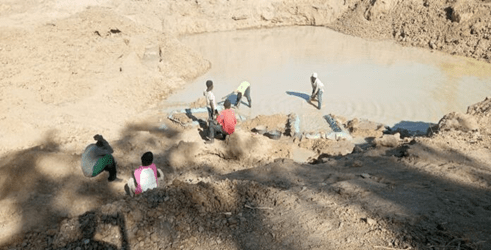
Sulaiman’s plight is not unique. In communities like Jirr and Wandi in Dass Local Government Area, children as young as 10 are abandoning their classrooms for the dangerous allure of the mines. From dawn till dusk, these children dig, shovel, and carry sand, enduring scorching heat and health hazards, all in the pursuit of monoxide—a mineral that promises a meager income but robs them of their childhood.
For 13-year-old Abdulrahman Musa, the decision was equally heart-wrenching. “I used to go to school,” he said, showing his calloused hands. “But my father said we needed money to eat, so I had to stop. Now, I work here almost every day.”
The sight of children working alongside adults at these mining sites is a grim reminder of the deepening cycle of poverty. For families struggling to survive, the immediate income from mining often outweighs the intangible promise of a better future through education.
The ripple effects are devastating. At Government Day Secondary School (GDSS) Wandi, over half the students are absent on any given day. When this reporter visited the school in November 2024, the dimly lit classrooms echoed with silence.
“Our classrooms are nearly empty,” lamented Malam Husaini, the administrative officer. “Parents prioritize mining because it solves their immediate needs, but it’s at the expense of their children’s future.”
In Dass, some schools are on the verge of closure due to dwindling attendance. The school has seen more than a 50% drop in enrollment over the past year. “We have empty desks and unused chalkboards,” Husaini said, his voice heavy with despair.
The statistics are equally alarming. A 2022 survey by Nigeria’s Multidimensional Poverty Index revealed that Bauchi had 1.37 million out-of-school children. Although Governor Bala Mohammed claimed a reduction to 700,000 in 2023, the haunting images of children like Sulaiman and Abdulrahman suggest the battle is far from over.
Husaini attributes the crisis to poverty. “Until the economic struggles of these families are addressed, efforts to keep children in school will remain futile,” he said, calling for government intervention at all levels.
His concerns align with a 2024 World Bank report that revealed 87 million Nigerians live below the poverty line. Worse still, a 2025 forecast by PricewaterhouseCoopers warns that 13 million more Nigerians could be driven into poverty due to government policies.
UNICEF further highlights the inequality in education funding, noting that children from the poorest families benefit the least from national education budgets. “This inequity fuels the cycle of poverty,” said Husaini. “Children are forced to work in the mines instead of attending school, perpetuating the hardships of their families for generations.”
The Jirr mining site represents more than just a source of income; it is a stark metaphor for the economic desperation gripping families in Bauchi. The weight of poverty is crushing the dreams of countless children, pushing them into labor and leaving a void in classrooms that once brimmed with youthful aspirations.
To break this cycle, comprehensive measures are urgently needed. Beyond enforcing mining bans, the government must implement poverty-alleviation programs, provide alternative livelihoods for parents, and invest heavily in education.
“There’s no silver bullet,” Husaini admitted. “But we cannot stand by while an entire generation is lost to the sands of illegal mining.”
The plight of Bauchi’s child miners demands immediate attention. As the sun beats down on Jirr’s dusty pits, children like Sulaiman continue to toil, their laughter and dreams buried beneath buckets of sand. For them, the fight against poverty is not just a statistic; it is a daily struggle for survival.
The question now is: will their cries for help be drowned out by the clang of mining tools, or will leaders take decisive action to reclaim the future of these children? The clock is ticking, and for Sulaiman and countless others, every day lost is a step further away from the education—and life—they deserve.
 PIONEER NEWS