
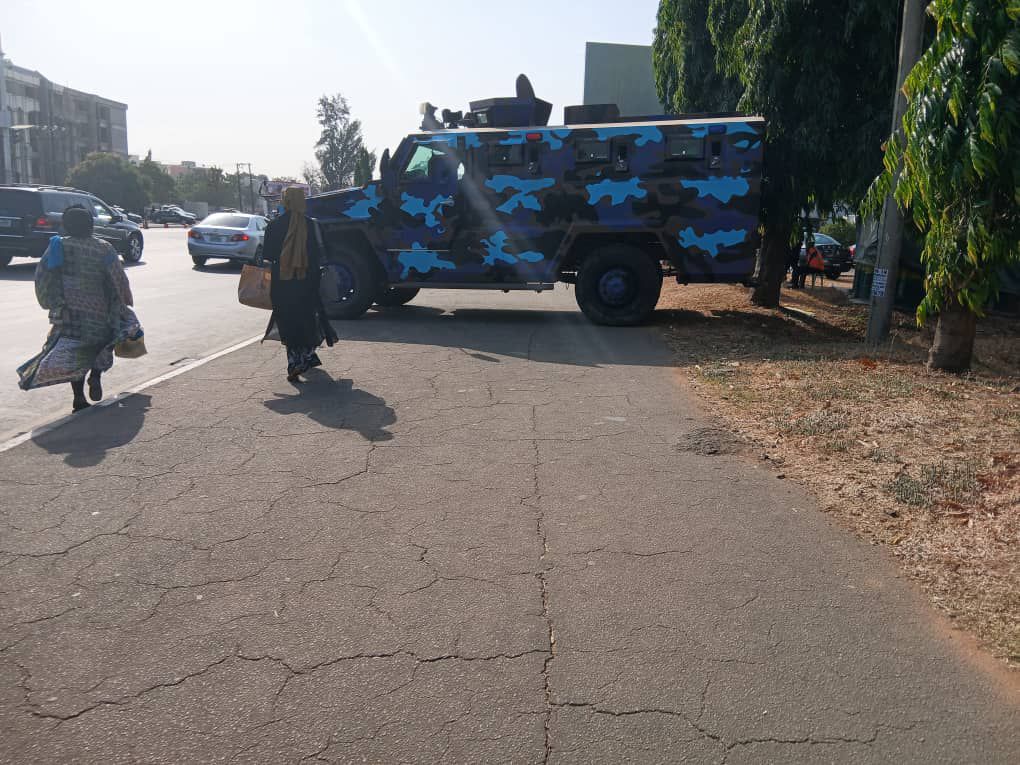
In a dramatic turn of events, the Force Headquarters in Abuja became a fortress on Monday as heavily armed police officers flooded the premises, creating a climate of unease ahead of activist and former presidential candidate Omoyele Sowore’s scheduled appearance. The heightened security measures, which included road barricades and anti-riot gear, underscored the police’s apprehension following Sowore’s viral accusations and the ensuing public outcry.
The embattled activist had been summoned by the police for questioning after he posted a video online alleging rampant extortion by officers at a Lagos checkpoint. The video, which sparked widespread criticism of the police force, led to Sowore facing a litany of allegations, including resisting and obstructing public officers, disobedience to lawful orders, cyberstalking, and actions allegedly intended to hinder arrests.
A letter issued by the Force Intelligence Department (FID) detailed the allegations against Sowore, stating that he was under investigation for offenses ranging from cyberstalking to refusal to assist public servants. The letter read in part:
“This office is investigating cases of Resisting and Obstructing Public Officers, Disobedience to Lawful Order, Acts Intended to Cause Grievous Harm or Prevent Arrest, Compelling Action by Intimidation, Reckless & Negligent Acts, Refusal to Assist Public Servant and Cyberstalking in which your name featured prominently. You are requested to report for an interview with the Deputy Inspector General of Police, Force Intelligence Department (FID), on Monday, 27th January 2025, at 10 a.m.”

Adding fuel to the fire, Sowore’s supporters rallied behind him. The Take It Back Movement, a group known for its relentless advocacy against injustice, circulated a flier on social media calling for a mass protest at the Force Headquarters. The flier, which quickly gained traction on X (formerly Twitter), featured the bold slogan “Occupy Force Headquarters” alongside images of Sowore and the Inspector General of Police.
By dawn on Monday, the streets leading to the Force Headquarters had been effectively sealed off, with a formidable police presence deployed to quell any potential unrest. Observers described the scene as a “siege-like atmosphere,” as officers wielding anti-riot equipment stationed themselves at strategic points to counter the anticipated demonstration.
The Take It Back Movement decried the police action, accusing the authorities of attempting to suppress dissent rather than address the systemic corruption highlighted in Sowore’s viral video. The group’s spokesperson described the activist’s invitation as a veiled attempt to intimidate him into silence, stating, “This is a deliberate effort to deflect attention from the real issue—police extortion—and silence one of the few voices willing to speak truth to power.”

As of press time, neither Sowore nor the police had issued a formal statement on the unfolding events. However, the activist’s supporters vowed to proceed with their demonstration, raising fears of potential clashes between protesters and security forces.
The incident has reignited public discourse on police accountability and freedom of expression in Nigeria, with many questioning the force’s priorities. For critics, the heavy-handed security response is emblematic of the systemic issues plaguing the country’s law enforcement.
While the dust is yet to settle, one thing is clear: the case against Omoyele Sowore has not only put the Nigerian Police Force under intense scrutiny but has also become a rallying point for citizens demanding transparency, justice, and an end to impunity. Whether this showdown will lead to meaningful reforms or deepen mistrust between the public and the police remains to be seen.
 PIONEER NEWS