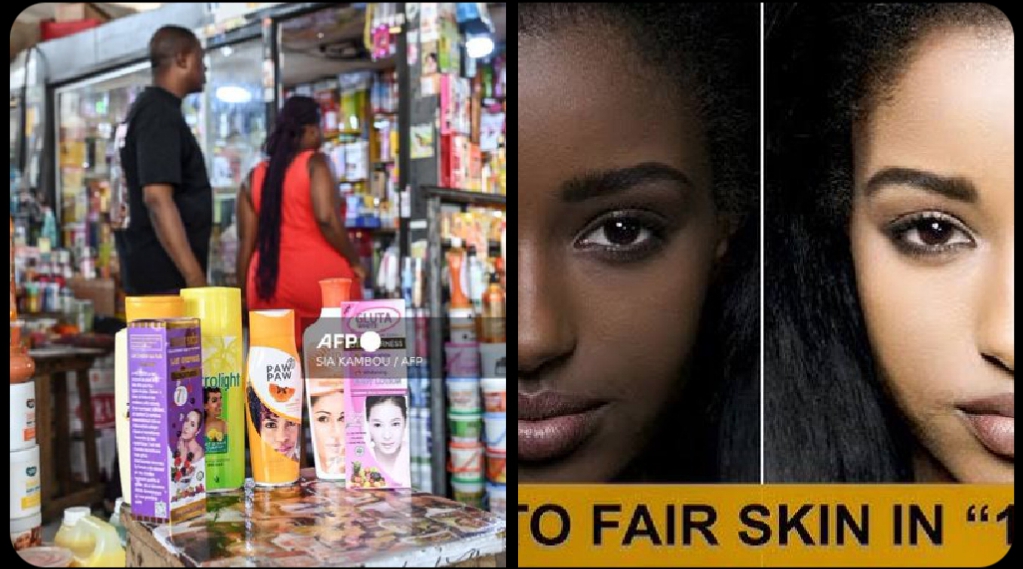
The Federal Government has expressed grave concerns over Nigeria’s alarming global ranking as the highest consumer of skin-lightening products. According to a statement shared on the official X handle of Nigerian Stories, a staggering 77 percent of Nigerian women reportedly use these products, raising eyebrows about the health, societal, and cultural implications of this trend.
This unsettling statistic places Nigeria at the forefront of a multi-billion-dollar global industry, with the demand for skin-lightening products driven largely by societal pressures and deep-rooted perceptions of beauty standards. Experts warn that the widespread use of these products is not just a cosmetic concern but also a potential public health crisis due to the harmful chemicals, such as mercury and hydroquinone, commonly found in many skin-bleaching products.
The government’s concern aligns with increasing calls from health professionals and advocacy groups to address the rampant use of these products. They cite the associated risks, which include skin damage, kidney failure, and an increased risk of certain cancers. Additionally, the psychological impact of promoting lighter skin as a beauty ideal continues to fuel debates about identity and self-worth in African societies.
While regulatory bodies like the National Agency for Food and Drug Administration and Control (NAFDAC) have banned some harmful products, enforcement remains a challenge, with counterfeit and unapproved creams flooding markets across the country.
The Federal Government’s renewed focus on this issue comes as part of its broader commitment to public health and cultural preservation. Stakeholders are now advocating for a multi-pronged approach, including stricter enforcement of product regulations, public awareness campaigns on the dangers of skin-lightening products, and a reorientation of societal beauty standards to celebrate the natural diversity of skin tones.
As the debate rages on, the onus falls on policymakers, cultural influencers, and health advocates to challenge these harmful norms and protect the health and dignity of Nigerian women. The time for action is now, as the cost of inaction could lead to a generation grappling with both physical and psychological scars.
 PIONEER NEWS