
In a controversial move raising global attention, South Sudan’s National Communications Authority (NCA) has ordered an immediate nationwide ban on social media platforms, including Facebook and TikTok, for up to 90 days. The renowned security analyst and counterinsurgency expert, Zagazola Makama, broke the news through his official X (formerly Twitter) handle, sparking intense debate about the implications of the decision.
The directive, issued on January 22, 2025, instructed Internet Service Providers (ISPs) to restrict access to the platforms starting at midnight. According to the NCA, the ban is a direct response to the circulation of graphic and disturbing content showing violent attacks on South Sudanese refugees in Wad Madani, Sudan. The government claims the viral videos have incited public distress, endangered national security, and adversely impacted citizens’ mental health.
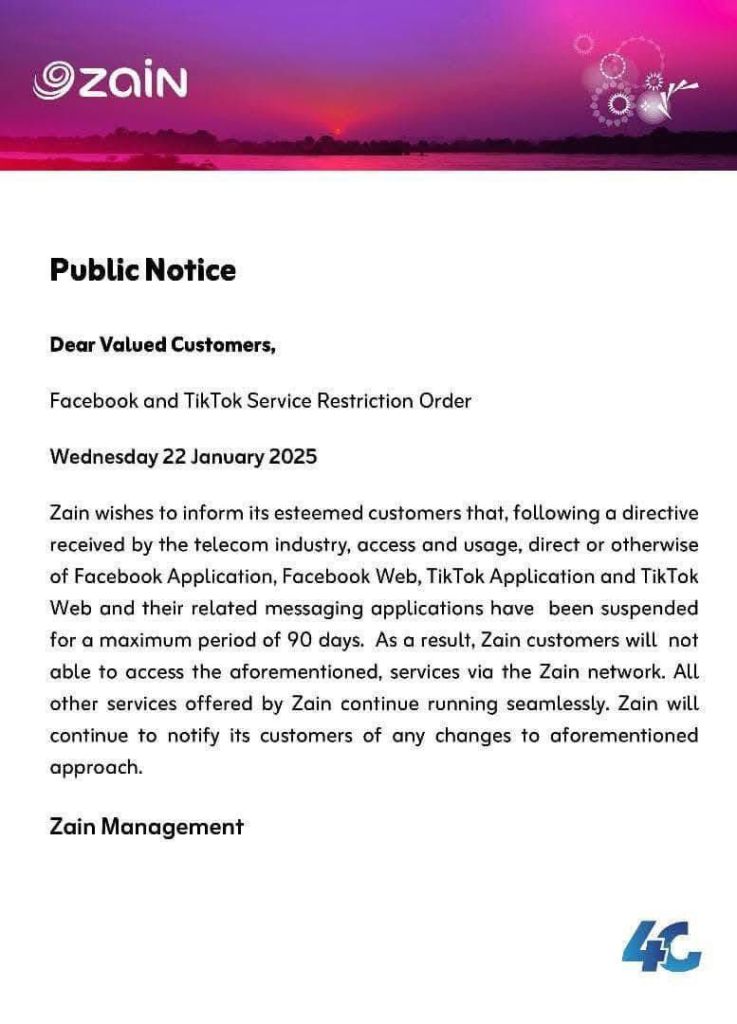
“The content circulating on social media poses a significant threat to national stability and the psychological well-being of our citizens,” the NCA stated. The authority emphasized that the decision was made to “curb the dissemination of harmful and inflammatory content” that violates national laws and undermines public order.
While the ban is set for a maximum of 90 days, the NCA clarified that it could be lifted earlier if the volatile situation is brought under control. However, the announcement has sparked a wave of mixed reactions both within and beyond South Sudan. Critics argue that the ban is a heavy-handed approach that infringes on freedom of speech and the right to access information. Meanwhile, supporters of the move insist it is necessary to restore calm and prevent further escalation of tensions.
Human rights organizations and international observers have also expressed concern about the broader implications of such a sweeping decision. “While addressing misinformation is crucial, shutting down social media platforms entirely could set a dangerous precedent, silencing voices and isolating citizens during a time when transparency is needed most,” said a spokesperson for the Global Digital Rights Alliance.
The ban has reportedly disrupted communication channels for millions of South Sudanese, many of whom rely on these platforms for personal, professional, and informational purposes. Entrepreneurs, activists, and journalists have raised alarms about the economic and social impact of the restrictions, calling
The ban has reportedly disrupted communication channels for millions of South Sudanese, many of whom rely on these platforms for personal, professional, and informational purposes. Entrepreneurs, activists, and journalists have raised alarms about the economic and social impact of the restrictions, calling for a more balanced solution.
As the world watches South Sudan navigate this unfolding crisis, questions about balancing national security and digital rights remain at the forefront. Will the government’s efforts succeed in maintaining order, or will they deepen the divide between authorities and their citizens? The next 90 days will undoubtedly be critical in shaping the future of free expression in the country.
 PIONEER NEWS