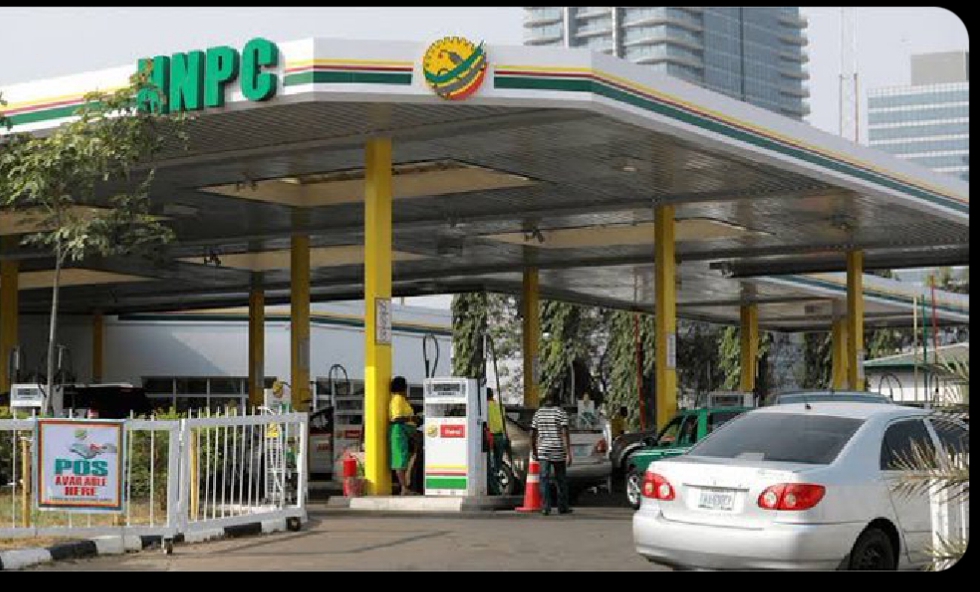
Nigerians woke up to yet another jolt to their wallets as the Nigerian National Petroleum Corporation (NNPC) announced a staggering increase in petrol prices, with Lagos residents now paying N965 per liter, while Abuja faces an even steeper cost of N990 per liter. The news, shared by Nigerian Stories via its official X handle, has ignited widespread outrage and concerns over the growing cost of living.
The sharp increase has sparked immediate reactions from citizens, civil society organizations, and economic experts, with many decrying the government’s inability to cushion the effects of its policies on the populace. “This is unacceptable,” said a commuter in Lagos. “How are Nigerians expected to survive when basic necessities like fuel keep skyrocketing without any significant increase in wages?”
Abuja residents, grappling with the highest prices, have expressed similar frustrations. For many, the hike means spending more on transportation, with ripple effects expected across goods and services. “This isn’t just a price hike—it’s a direct attack on our ability to live with dignity,” lamented an Abuja resident.
This price surge comes amidst a backdrop of economic challenges, including inflation, devaluation of the naira, and widespread unemployment. Analysts have warned that the fuel hike will exacerbate these challenges, pushing more Nigerians below the poverty line. Transportation costs are expected to soar, inevitably leading to higher prices for food and other essential commodities.
The removal of fuel subsidies earlier in 2024 was touted as a necessary step to stabilize the economy. However, the government’s promise of palliatives and measures to mitigate the hardship has been met with skepticism, as many Nigerians feel abandoned in the face of these mounting challenges.
The NNPC has yet to provide a detailed explanation for the price increase, leaving citizens questioning the efficiency of the deregulation policy and the corporation’s management of Nigeria’s oil resources. Activists and opposition leaders are calling for greater transparency in the pricing structure, as well as immediate government intervention to reduce the burden on ordinary Nigerians.
“Where are the palliatives? Where is the promised relief? Nigerians cannot bear this anymore,” an activist stated in a heated online discussion.
The latest price adjustment has reignited conversations about Nigeria’s dependency on imported fuel despite being one of the world’s largest oil-producing nations. Experts argue that the government must fast-track local refining capacity, particularly with the Dangote Refinery and other modular refineries, to ease reliance on imports and stabilize fuel prices.
As Nigerians brace for the ripple effects of this latest development, the government faces mounting pressure to address the economic hardship head-on. Will this be the tipping point that forces a rethink of current policies, or will it deepen the disconnect between the government and its people? The answers lie in the days ahead.
 PIONEER NEWS