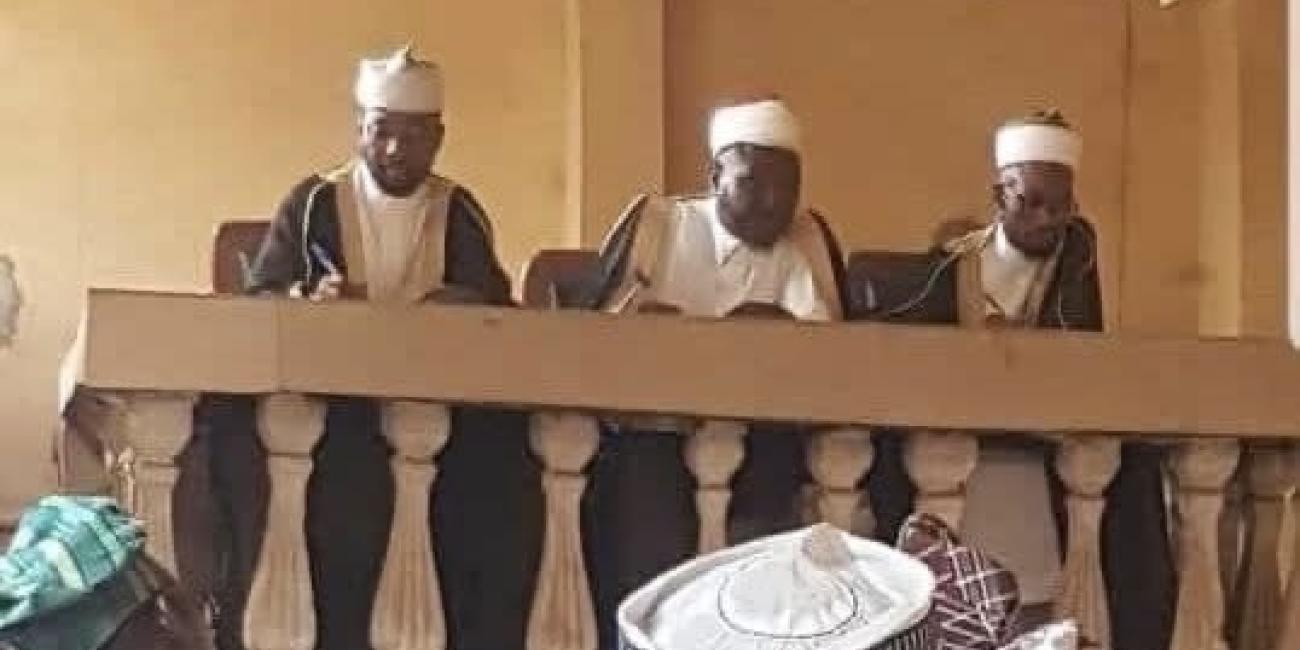
The Independent Shariah Arbitration Panel in Ekiti State has made history by holding its first public sitting at the iconic Oja Oba Central Mosque in Ado-Ekiti. This landmark event marked a significant stride in the application of Islamic jurisprudence within the state, despite lingering opposition from various groups in the southwestern region.
Confirming the development to SaharaReporters, residents of Ekiti State and Professor Ishaq Akintola, the Executive Director of the Muslim Rights Concern (MURIC), hailed the move as a testament to the growing embrace of Islamic arbitration. The inaugural sitting, which took place last Thursday, showcased the panel’s commitment to fostering justice and peace within the Muslim community.
The proceedings were presided over by three distinguished Kadhis—Imam Abdullahi Abdul-Mutolib, Imam Abdulraheem Junaid-Bamigbola, and Dr. Ibrahim Aminullahi-Ogunrinde. The panel entertained two marriage-related disputes during its maiden session, demonstrating the critical role of Shariah in resolving personal and family matters.
In the first case, the head of the panel, Imam Abdullahi Abdul-Mutolib, announced a consent judgment that amicably resolved the conflict between a couple. The resolution was achieved through interventions from family members, who played a pivotal role in diffusing tensions and paving the way for reconciliation.
However, the second case—where a wife accused her husband of neglecting his marital responsibilities—proved more complex. The panel adjourned the hearing until January 30 to allow for further investigations, emphasizing its commitment to ensuring a fair and just outcome.
The establishment and activities of the Shariah Panel have sparked a wave of reactions across Ekiti State and beyond. While Muslim communities have welcomed it as a vital mechanism for resolving disputes in line with Islamic principles, critics have voiced concerns over the potential implications for Nigeria’s secular constitution.
In a region predominantly governed by customary and statutory laws, the implementation of Shariah arbitration stands as a bold move, one that highlights the delicate interplay between faith, culture, and governance in Nigeria’s pluralistic society.
The success of the panel’s inaugural sitting underscores its potential to address pressing issues within the Muslim community while fostering harmony through peaceful resolution mechanisms. As it continues its work, the panel faces the dual challenge of delivering justice and navigating opposition from those skeptical of Shariah’s role in the southwestern region.
With its next sitting scheduled for January 30, all eyes are on the Shariah Panel as it charts a new course for Islamic arbitration in Ekiti State.
 PIONEER NEWS