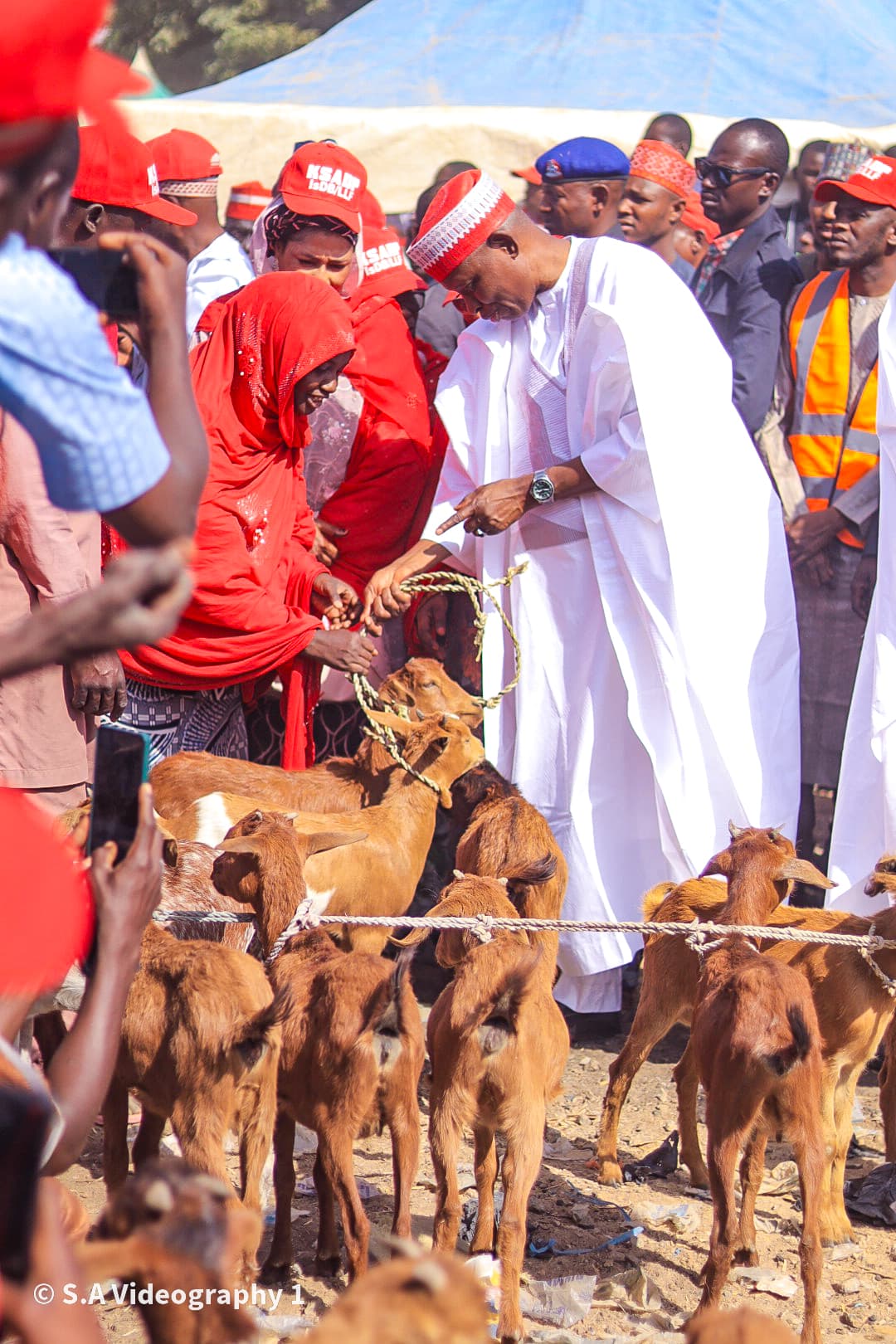
In a bold stride toward women’s empowerment and economic development, the Governor of Kano State has launched a transformative initiative aimed at improving the livelihoods of women across the state. According to Nigerian Stories on its official X handle, the governor distributed a total of 7,158 goats to 2,386 women in a well-coordinated program designed to foster financial independence and sustainable income generation.
This ambitious initiative aligns with the state government’s broader agenda of tackling poverty and promoting self-reliance among women, particularly in rural areas. By empowering 2,386 women with livestock, the program provides them with an opportunity to engage in goat-rearing and dairy production, which are known to be lucrative ventures in Kano State.
Each beneficiary receives three goats—a strategic allocation to enable breeding and maximize returns. This approach ensures long-term economic benefits as the goats multiply, creating a self-sustaining source of income for the women and their families.
The livestock empowerment scheme is not just about individual beneficiaries; it has the potential to stimulate rural economies at large. With increased goat-rearing activities, ancillary industries such as feed production, veterinary services, and goat milk processing are likely to experience a surge in demand, thereby creating more job opportunities in the region.
Several women who received goats have expressed profound gratitude for the initiative, describing it as a life-changing opportunity. A beneficiary from Bichi Local Government Area said, “I have been struggling to support my family, but these goats will give me a steady source of income. I am deeply thankful to the governor for this thoughtful gesture.”
The initiative has drawn praise from development experts, women’s groups, and traditional leaders. Many have applauded the governor for his innovative approach to tackling poverty and empowering women at the grassroots level.
“This is a practical and impactful program,” said a representative of a local women’s advocacy group. “It is refreshing to see a government focus on initiatives that directly improve the lives of vulnerable populations.”
However, some observers have called for measures to ensure proper implementation and sustainability. They emphasized the need for follow-up support, such as training in livestock management and access to veterinary care, to maximize the program’s impact.
The goat distribution program is part of a series of initiatives rolled out by the Kano State government to empower women and address unemployment. It underscores the administration’s commitment to driving inclusive growth and improving the quality of life for all residents.
While distributing goats may seem unconventional to some, its potential for economic transformation cannot be overstated. This initiative could serve as a model for other states, demonstrating how targeted interventions can uplift marginalized communities and contribute to national development.
As the goats begin to multiply and the women’s incomes grow, the ripple effects of this program will undoubtedly be felt across Kano State and beyond. The governor’s bold move reaffirms the importance of innovative, people-centered governance in fostering sustainable development.
What are your thoughts on this groundbreaking initiative? Could this model be adopted in other states to address poverty and empower vulnerable groups?
 PIONEER NEWS