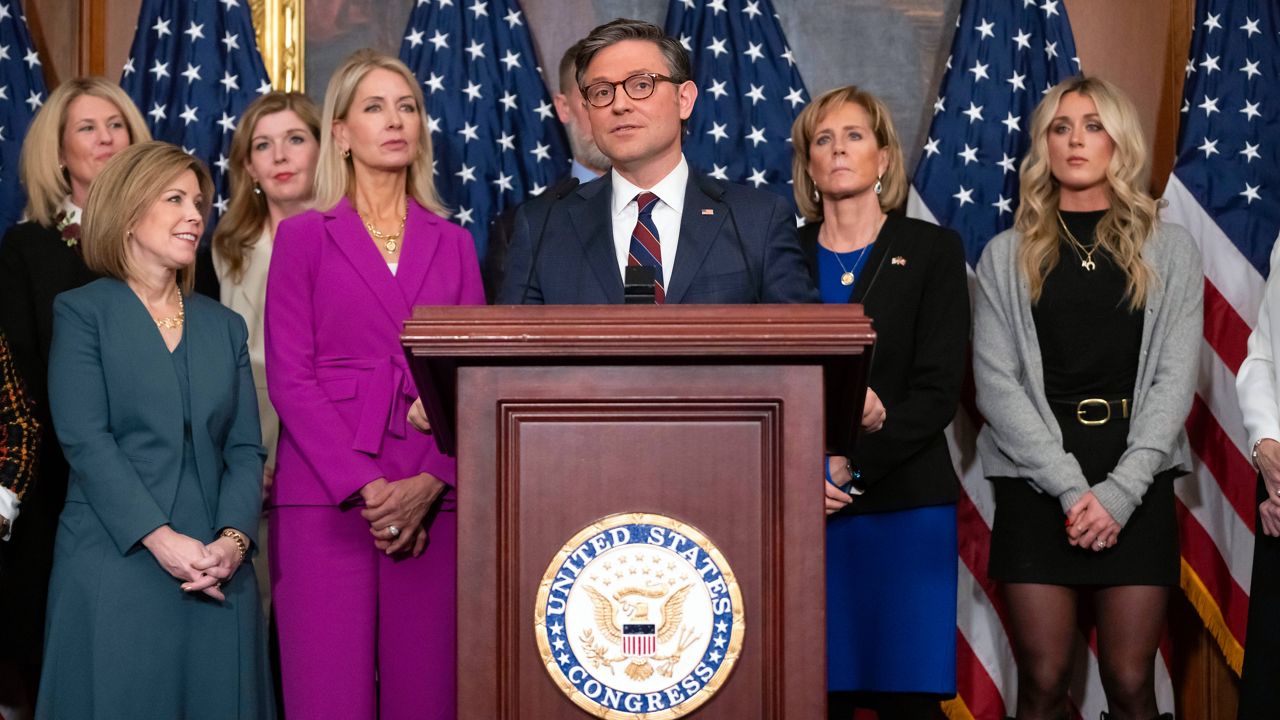
In a significant move, the United States House of Representatives has passed a bill banning transgender men from participating in men’s sports and transgender women from competing in women’s sports. This landmark legislation, widely regarded as a victory by conservative lawmakers, has reignited debates on the intersection of gender identity and sports.
The announcement was made via the official X handle of Sahara Reporters, citing the statement from U.S. House Speaker Mike Johnson, a prominent Republican. Johnson celebrated the passage of the bill, known as the Protection of Women and Girls in Sports Act, authored by Representative Greg Steube.
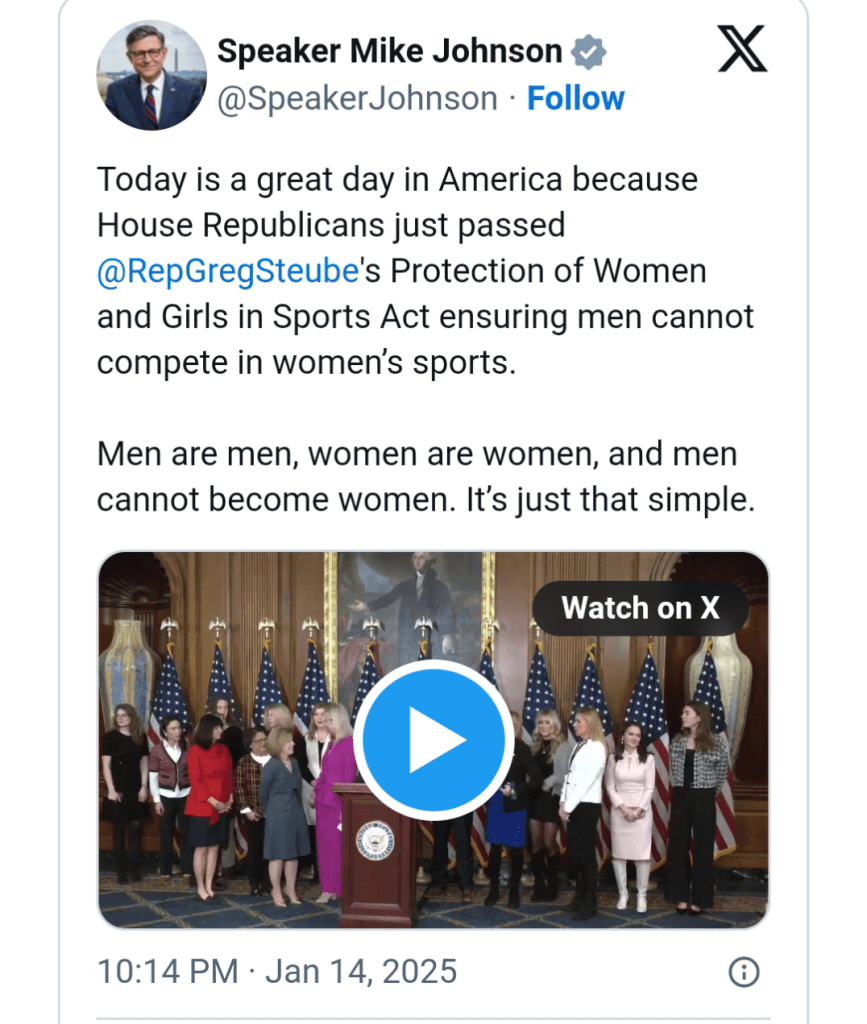
“Today is a great day in America because House Republicans just passed @RepGregSteube’s Protection of Women and Girls in Sports Act, ensuring men cannot compete in women’s sports,” Johnson declared in a post. “Men are men, women are women, and men cannot become women. It’s just that simple.”
The decision has sparked widespread reactions across the United States and beyond, with supporters lauding it as a safeguard for fairness in sports and critics condemning it as discriminatory and regressive.
The move has drawn comparisons to former President Donald Trump’s 2017 policy banning transgender individuals from serving in the U.S. military. On July 26, 2017, Trump announced via Twitter that transgender individuals would no longer be allowed to serve in the military, citing concerns about “tremendous medical costs and disruption.”
That policy, however, was overturned in 2021 by President Joe Biden, who restored the rights of transgender individuals to serve openly in the armed forces. Biden’s administration has consistently advocated for the protection of LGBTQ+ rights, marking a stark contrast to Trump’s policies.
The House’s recent decision has led to speculations that Donald Trump, the presumed incoming president, may revisit his previous stance on transgender issues, particularly regarding military service. While Trump has not made definitive statements about his intentions on the matter, political analysts suggest that his administration might reinforce policies limiting transgender rights in various sectors.
The Protection of Women and Girls in Sports Act underscores the deepening divide in the U.S. on issues of gender identity and inclusion. While conservatives argue that the bill ensures a level playing field for women and girls in sports, critics warn it could further marginalize transgender individuals, sparking legal battles and societal backlash.
The passage of this bill marks another chapter in the ongoing culture wars in the United States, with implications not only for sports but also for broader discussions about civil rights and equality. As the debate intensifies, the nation awaits the next steps from both lawmakers and advocacy groups.
This development is a reminder that policies surrounding transgender rights remain a polarizing issue in American politics, with far-reaching consequences for society, sports, and the LGBTQ+ community.
 PIONEER NEWS