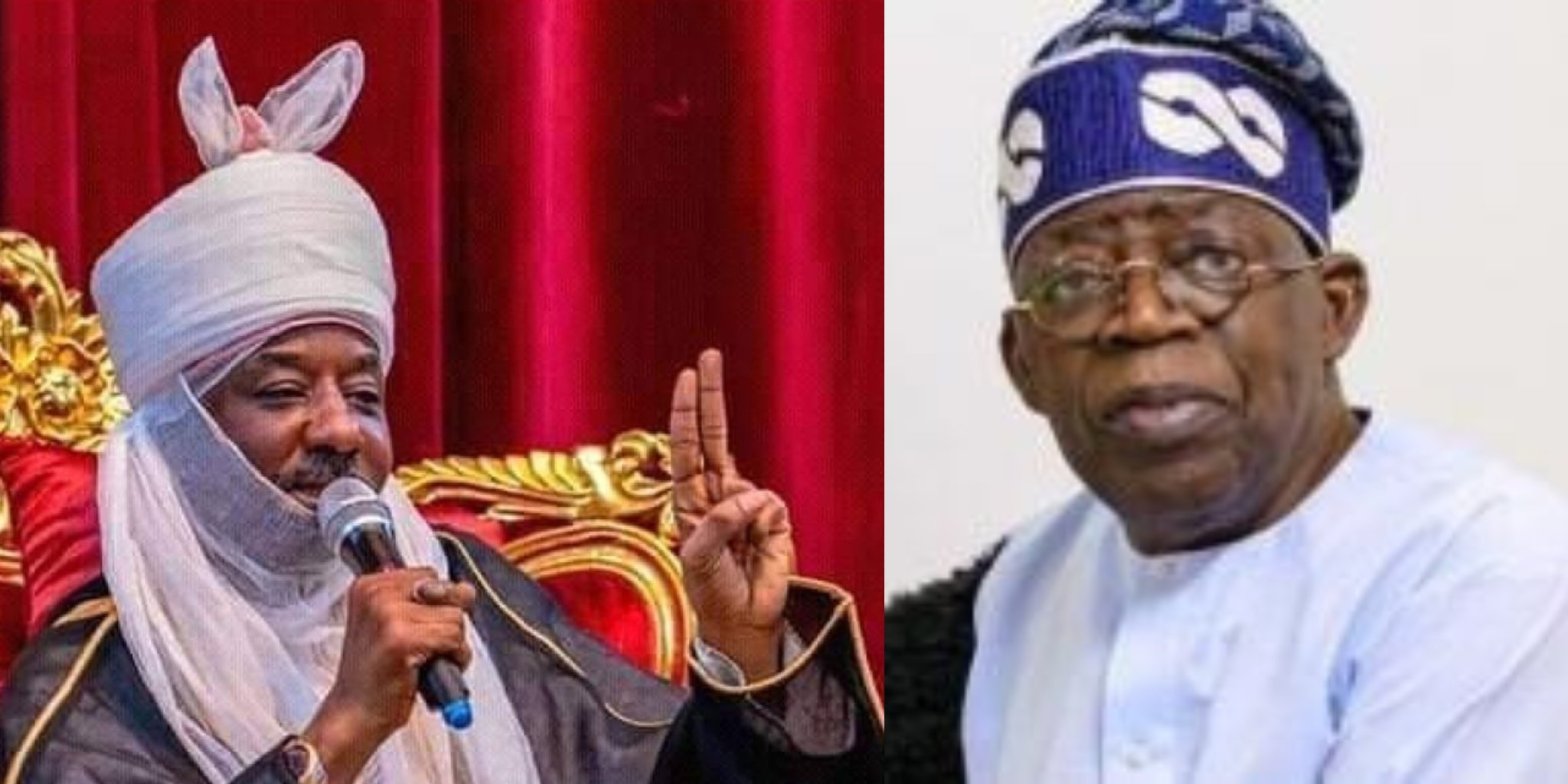
In a blistering critique of President Bola Tinubu’s administration, the Emir of Kano, Muhammad Sanusi II, has declared his refusal to offer advice on resolving Nigeria’s deepening economic challenges. Speaking at the 21st anniversary of Fawehinmiism during the 2025 Gani Fawehinmi Annual Lecture at the Lagos Airport Hotel, Ikeja, the former Central Bank Governor laid bare his frustrations with the government’s approach.
Sanusi, renowned for his incisive economic insights, stated unequivocally that he would withhold his expertise, citing the administration’s failure to act in a manner befitting allies. “They’re my friends, but if they don’t behave like friends, I won’t behave like one either,” he quipped, adding that he would rather enjoy a movie with popcorn in his home than assist a government he feels has ignored credible counsel.
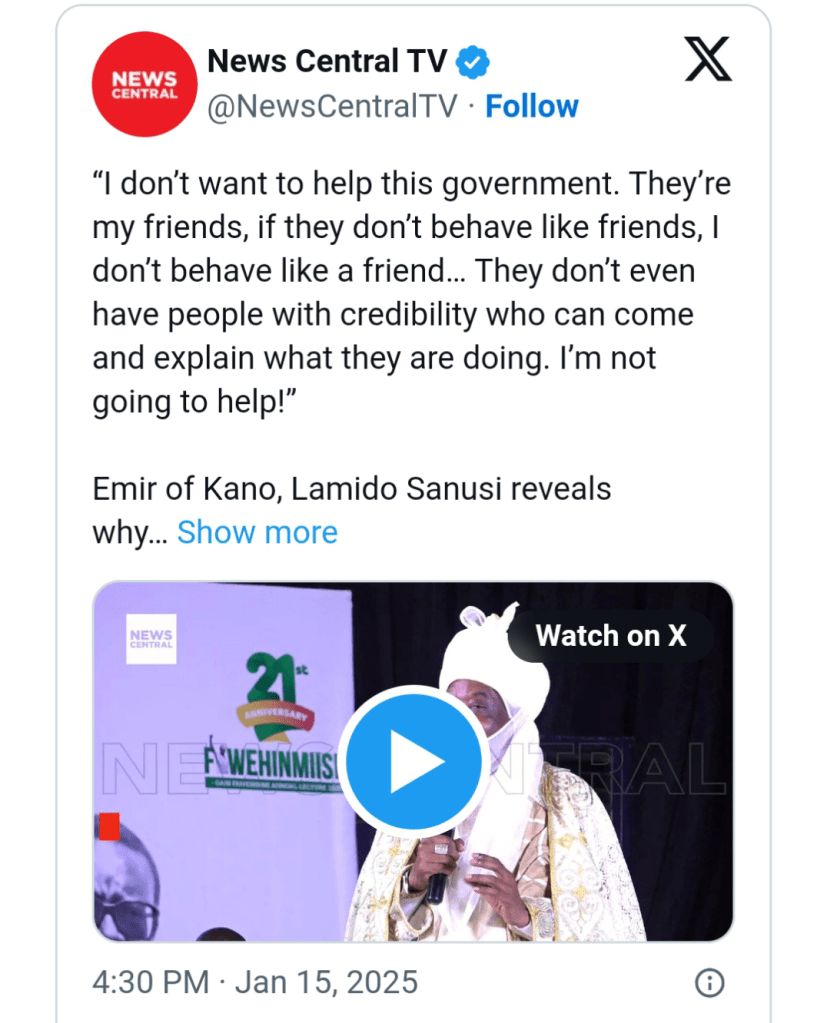
The Emir lamented the government’s apparent lack of credible individuals capable of effectively articulating and justifying its economic policies to Nigerians. “They don’t even have people with credibility who can come and explain what they are doing,” Sanusi remarked, adding that it is the responsibility of the government to make its policies transparent to the public.
While refraining from providing a detailed economic analysis, Sanusi issued a stark warning about the nation’s economic trajectory. According to him, Nigeria’s current economic hardships are a predictable outcome of decades of reckless fiscal management. “What we are going through today is, at least in part, the necessary consequence of decades of irresponsible economic management,” he declared.
The former Central Bank Governor, known for his bold stance on financial matters, emphasized that he could easily break down the economic situation and offer solutions, but he has chosen not to. “If I explain, it will help this government, and I don’t want to help this government,” Sanusi stated, underscoring his disillusionment.
Sanusi’s remarks add to growing concerns about the Tinubu administration’s handling of Nigeria’s economic crisis, which has been marked by rising inflation, subsidy removal, and foreign exchange challenges. His decision to withhold advice reflects a broader sentiment of frustration among stakeholders who believe the government must earn the trust and support of credible voices to navigate the nation’s troubled waters.
As Nigeria grapples with these challenges, Sanusi’s critique serves as a sobering reminder of the importance of responsible governance and transparent leadership in addressing the pressing needs of its citizens.
 PIONEER NEWS