
Renowned human rights activist and former Senator Shehu Sani has stirred a reflective national discourse with his latest remarks on the tragic killing of Sir Ahmadu Bello, the Sardauna of Sokoto, and other leaders in the January 1966 coup. In a heartfelt post on his official X account, Sani described the brutal assassination of Bello as a “seed of evil” whose consequences continue to haunt Nigeria to this day.
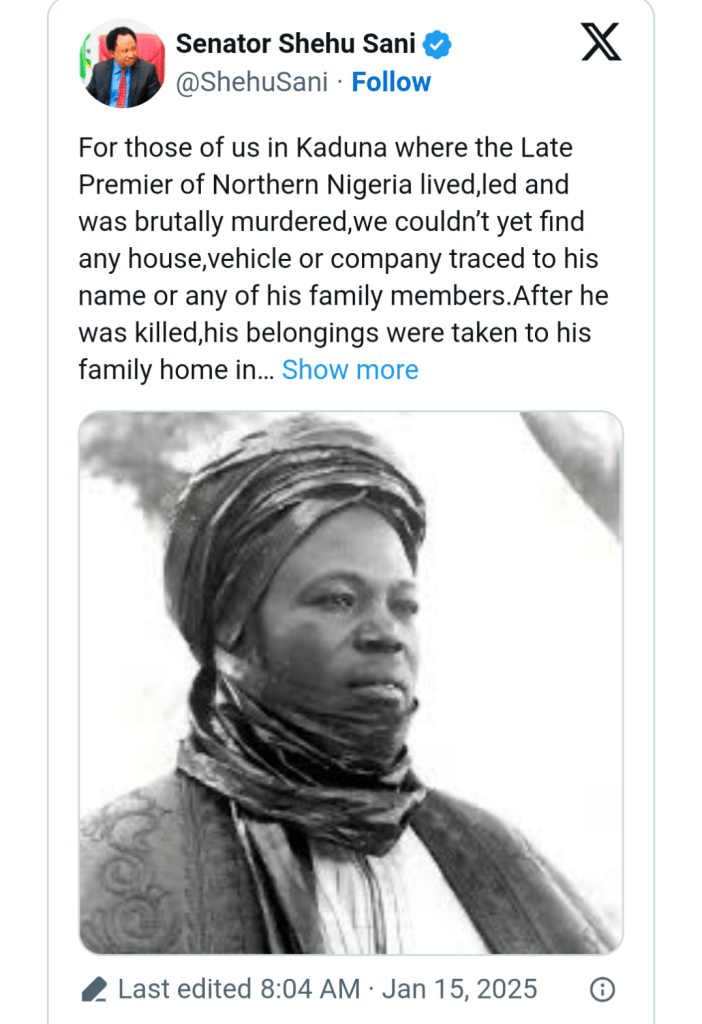
Shehu Sani highlighted Sir Ahmadu Bello’s selflessness, leadership, and unwavering dedication to his people and the nation. The former Premier of Northern Nigeria, widely revered for his visionary leadership and integrity, left behind no material wealth, a rare legacy in modern political history.
“For those of us in Kaduna, where the Late Premier of Northern Nigeria lived, led, and was brutally murdered, we couldn’t yet find any house, vehicle, or company traced to his name or any of his family members,” Sani noted in his post. He further revealed that after Bello’s tragic death, his modest belongings were returned to his family home in Sokoto.
Sani’s reflections painted a poignant picture of a man who gave everything for the unity and progress of his people but met a violent end at the height of his service. “The late Sardauna did everything for his people and his country and died a materially poor man,” he wrote, underscoring the rarity of such humility in leadership.
The former senator lamented that the murder of Bello and other leaders during the 1966 coup planted seeds of division and unrest that still ripple through Nigeria’s socio-political landscape.According to Sani, the wounds inflicted by these events remain unhealed, casting a long shadow over the nation’s progress.
“His murder and that of others in 1966 was the seed of evil that continues to haunt our country,” Sani wrote solemnly, concluding with prayers for the souls of the coup’s victims: “May the souls of all the victims of the 1966 coup rest in peace. Ameen.”
Sir Ahmadu Bello, widely regarded as one of Nigeria’s most iconic and principled leaders, was a staunch advocate of unity and development, particularly in Northern Nigeria. His assassination, alongside other prominent figures, marked a pivotal moment in the country’s history, one that many, like Sani, believe set the stage for decades of political instability and ethnic tension.
Sani’s post has sparked widespread reactions, with many Nigerians taking to social media to reflect on the lessons of the past and the enduring importance of integrity and selflessness in leadership. As the nation grapples with present-day challenges, the former senator’s words serve as a sobering reminder of the cost of division and the need for unity in shaping a brighter future.
 PIONEER NEWS