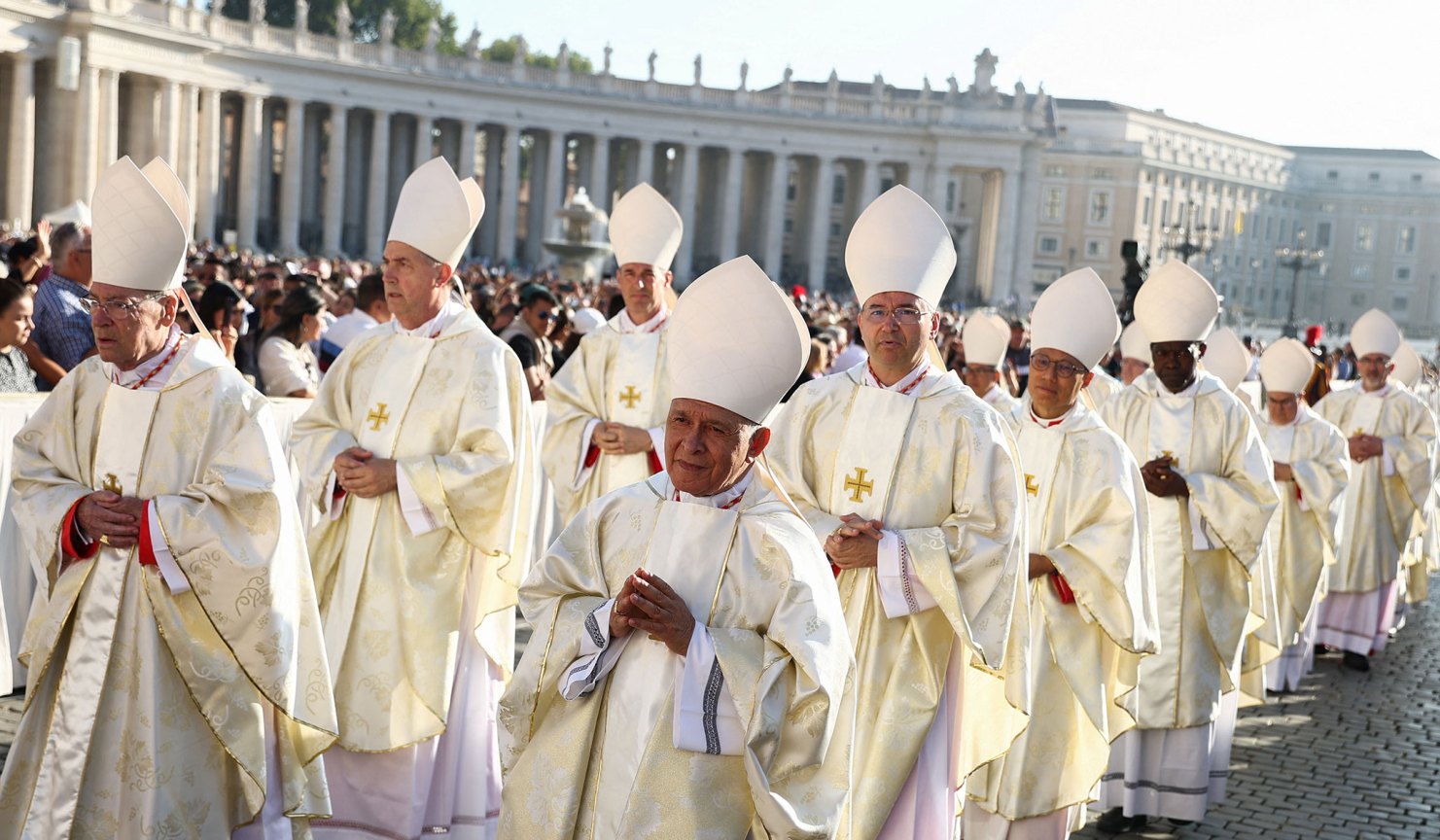
In a landmark development that signals a potential shift in Catholic Church traditions, Italian bishops have issued new guidelines permitting gay men to become priests, provided they commit to celibacy. This monumental decision, approved by the Vatican, has been reported by Sky News and highlighted on Sahara Reporters’ official X handle, igniting widespread discussions across religious and secular circles.
The guidelines, which represent a departure from previous restrictions, emphasize that a candidate’s sexual orientation should not overshadow the broader assessment of their suitability for priesthood. Seminary directors are now encouraged to evaluate candidates holistically, taking into account their personality, spirituality, and commitment to the Church’s teachings.
“When referring to homosexual tendencies in the formation process, it is also appropriate not to reduce the discernment to this aspect alone, but … to understand its meaning within the whole framework of the young person’s personality,” the guidelines state.
This decision subtly revises the Vatican’s 2016 directive, which discouraged the ordination of individuals with “deep-seated homosexual tendencies.” While not an outright ban, the directive created significant barriers for gay men seeking to join the priesthood, fueling debates about inclusivity within the Church.
Pope Francis, who has often been regarded as a progressive leader since assuming the papacy in 2013, has taken steps to adopt a more inclusive approach toward the LGBTQ+ community. His papacy has seen historic gestures, including permitting priests to bless same-sex couples on a case-by-case basis and famously declaring, “Who am I to judge?” when asked about gay Catholics.
The new guidelines, however, are specific to Italy, leaving the global Catholic community wondering whether this inclusive stance will be adopted in other countries. Some view this as a crucial step toward bridging the gap between traditional Church doctrine and modern societal values, while others see it as a controversial move that could spark resistance among conservative factions within the Church.
The decision has also reignited conversations about the broader role of celibacy in the priesthood, particularly as it pertains to LGBTQ+ individuals. Advocates for change argue that allowing gay men to serve openly as priests—provided they adhere to the vow of celibacy—aligns with the Church’s core message of love, acceptance, and redemption.
However, critics warn that such changes could create divisions within the Church, as conservative Catholics remain wary of deviating from long-held doctrines. The Vatican has yet to comment on whether similar guidelines will be adopted in other regions, leaving the global faithful to watch Italy’s experiment closely.
As the Catholic Church continues to grapple with the balance between tradition and inclusivity, this decision by Italian bishops marks a significant chapter in its evolution, offering hope to many LGBTQ+ Catholics seeking representation within their faith. For now, all eyes remain on Italy, as the world waits to see how this bold move will shape the future of the Church.
 PIONEER NEWS