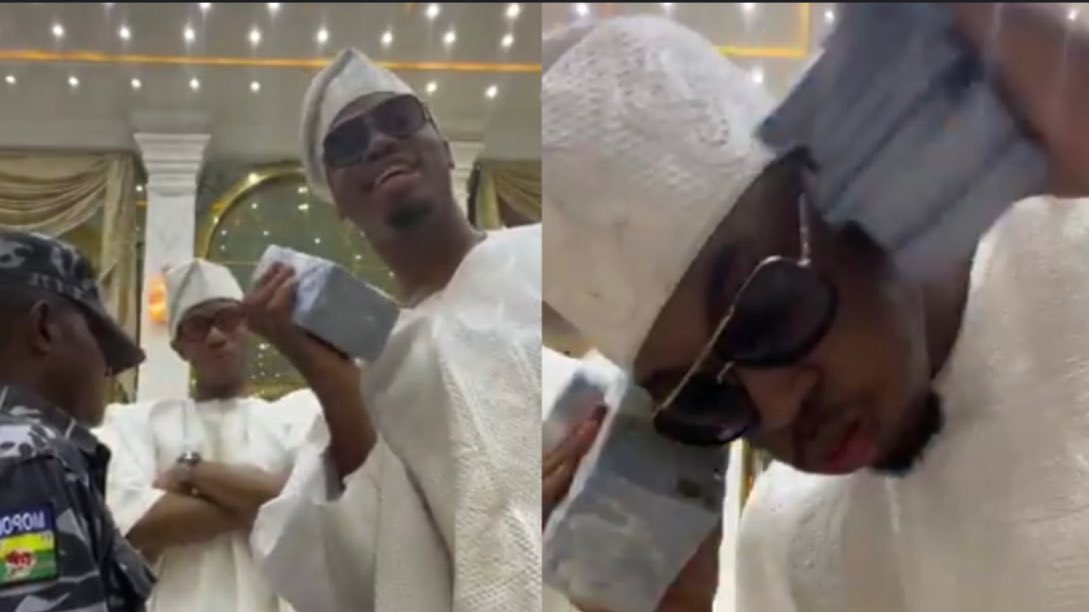
In a controversial turn of events, the Nigerian Police Force has come under scrutiny after arresting only the officer involved in a viral video that featured the sons of Lagos billionaire industrialist, Chief Rasaq Okoya, abusing the naira. Despite public outcry, no action has been taken against the billionaire’s sons, who were allegedly the main culprits.
The viral footage, which surfaced online, captured the Okoya heirs engaging in the reckless spraying and mishandling of the naira during a public event—a clear violation of the Central Bank of Nigeria’s (CBN) regulations prohibiting such acts. However, instead of holding all parties accountable, the police have focused solely on the officer featured in the video.
In a statement released on Friday through his official X handle, the Force Public Relations Officer, ACP Olumuyiwa Adejobi, confirmed the arrest and detention of the officer, who is now facing disciplinary action. Adejobi described the officer’s involvement as “unethical and unprofessional,” reiterating the force’s commitment to upholding discipline within its ranks.
“The policeman captured in the recent viral video shared by the sons of the Lagos businessman, Chief Okoya, where they were abusing the naira, has been identified and detained for disciplinary action,” Adejobi stated.
Despite this admission, the statement conspicuously omitted any mention of repercussions for the Okoya sons, raising questions about the impartiality of the investigation. Critics have accused the police of shielding the wealthy and influential while focusing punitive measures solely on the officer, who appears to have been a secondary player in the incident.
The Central Bank of Nigeria has consistently emphasized the importance of respecting the naira as a national symbol. Violations such as spraying or mishandling the currency during events not only undermine its dignity but also contravene the country’s laws. Yet, this case has reignited concerns over selective justice, with many Nigerians expressing outrage at what they perceive as a double standard in the application of the law.
Public opinion on social media has been overwhelmingly critical, with users calling for a thorough investigation and equal treatment for all involved. “Why are the Okoya sons walking free while only the officer is being punished? This reeks of favoritism and a lack of accountability,” one user commented.
As the controversy deepens, observers are calling on the Nigerian Police Force to demonstrate fairness and ensure that justice is served, regardless of the social or economic status of those involved. Meanwhile, civil society organizations have urged the Central Bank of Nigeria to intervene and reinforce the need for strict adherence to its regulations.
This incident highlights a recurring challenge in Nigeria’s justice system—one where wealth and influence often appear to tilt the scales, leaving ordinary citizens disillusioned. The public awaits further action, hoping this case will serve as a litmus test for the Nigerian Police’s commitment to upholding justice without fear or favor.
 PIONEER NEWS