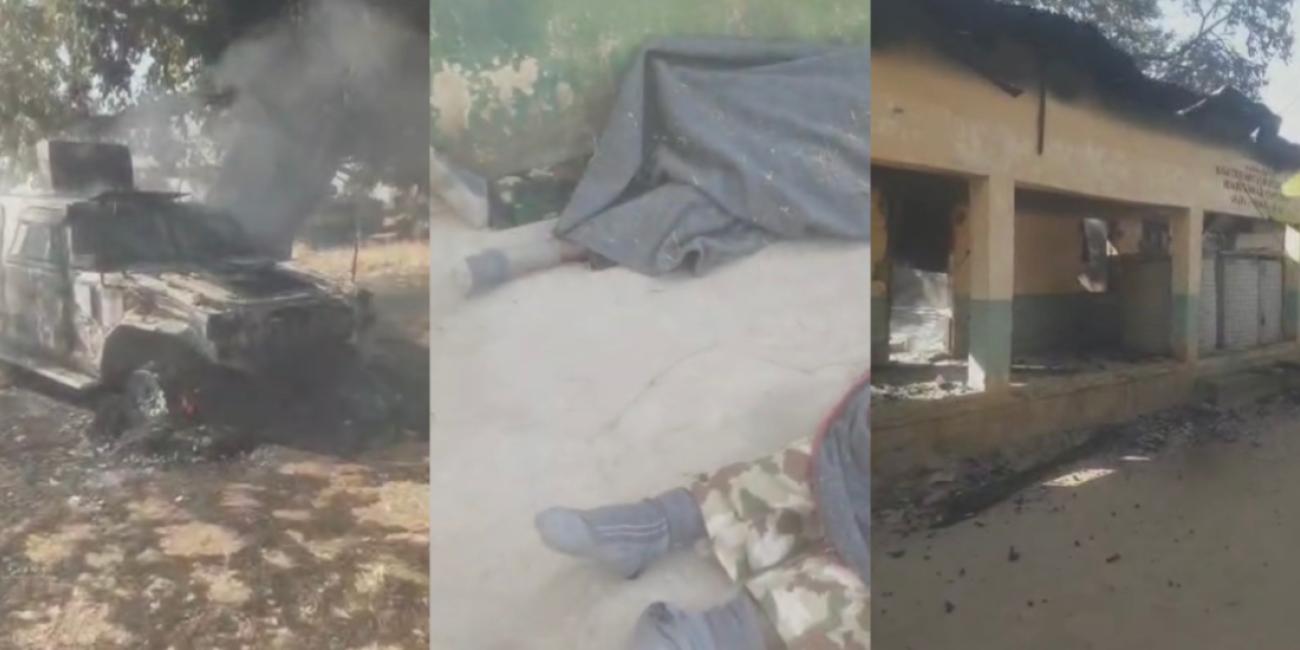
In a chilling display of resilience, Boko Haram/Islamic State West Africa Province (ISWAP) terrorists launched a deadly attack on a Forward Operating Base (FOB) in the Damboa Local Government Area of Borno State, leaving several Nigerian soldiers dead and others missing. The assault, which took place in the early hours of Saturday, January 4, 2025, has further underlined the insurgency’s ongoing threat in the region.
Security sources report that the attack began around 4 a.m. and lasted for over two hours, leaving a trail of destruction. The terrorists not only killed soldiers but also razed numerous buildings and military operational vehicles, crippling the base’s functionality.
“25 Taskforce Brigade was attacked during the weekend, resulting in heavy casualties. So far, we have recovered over seven bodies,” a security source told Sahara Reporters. “The terror group invaded the camp at FOB Sabon Gari using various weapons.”
The attack is part of a broader strategy by ISWAP to consolidate its dominance in the region since the death of Abubakar Shekau, the infamous leader of Boko Haram. The sect’s ranks have swelled with the defection of hundreds of fighters, further emboldening its operations around Lake Chad and surrounding areas.
ISWAP has increasingly targeted military installations in a bid to destabilize the region and undermine Nigeria’s counter-terrorism efforts. This latest incident highlights the challenges faced by the Nigerian Armed Forces, despite their repeated assurances of commitment to eradicating terrorism.
For over a decade, Boko Haram and ISWAP have terrorized the northeastern states of Borno, Adamawa, and Yobe, leaving countless communities in ruins. The insurgency has claimed tens of thousands of lives and displaced millions, creating one of the world’s most severe humanitarian crises.
The Nigerian Army, while yet to issue an official statement on the Damboa attack, has reiterated its determination to eliminate terrorism in the country. However, the growing frequency and intensity of attacks raise questions about the effectiveness of current counter-insurgency strategies.
As the nation mourns the loss of its soldiers, there is a renewed urgency for robust measures to counter the insurgency. Improved intelligence, better equipment for troops, and enhanced regional cooperation are critical to curbing the menace of terrorism.
The Damboa attack serves as a grim reminder of the long road ahead in Nigeria’s fight against insurgency, and the cost of inaction is too great to bear.
 PIONEER NEWS