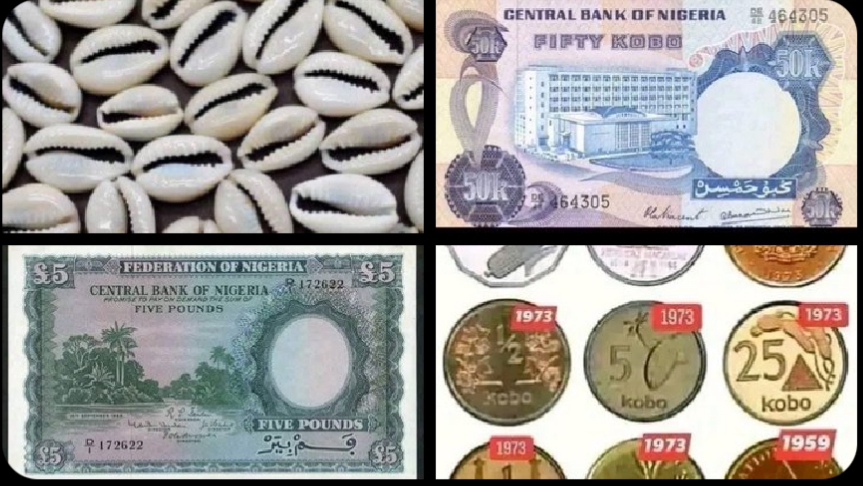
1. Nigerians haven’t always had money.
Before the colonial era, Nigerians traded differently. Value was exchanged through systems like trade by barter where people exchanged goods and services for other goods and services.
If you wanted yams, for example, you had to have something valuable like ivory or cotton to give in exchange. People also traded things like fish, gin, beads, tobacco and salt for whatever they wanted.
As time went on, the concept of currencies became more stable, as people relied mainly on cowries, beads and manilla currency.

2. The British introduced the first currency in Nigeria.
During Britain’s colonisation of Nigeria, the concept of money was introduced. Nigerians used Pounds, Pence and Shillings.
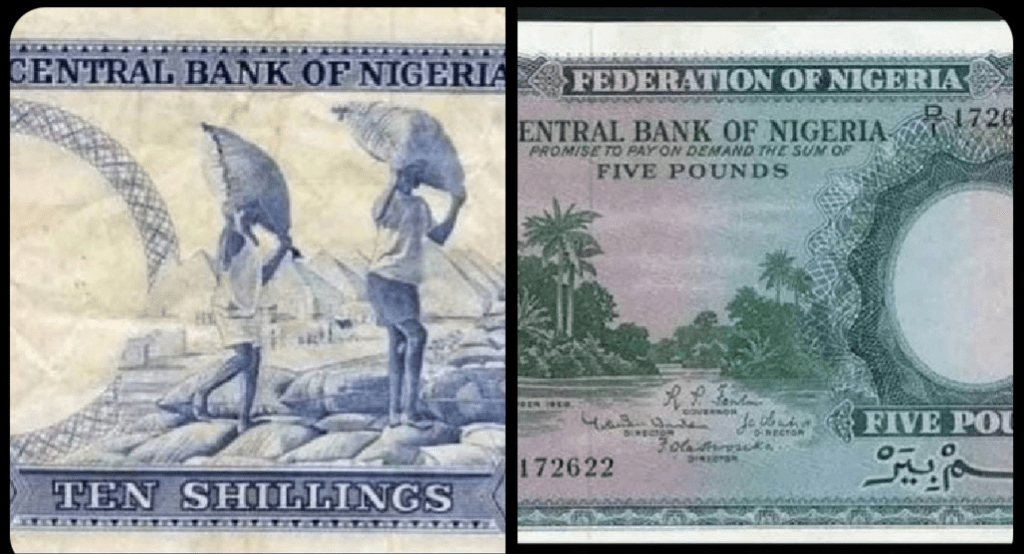
Nigeria used Pound Sterling until 1973
Even though the Central Bank of Nigeria was established in 1958, Nigeria continued to use the Pound Sterling for 13 years after she gained independence.
Nigeria was the last country to abandon this system among the British colonised Countries. In 1973, Nigeria started using the Naira.

3. The Naira was introduced in 1973.
On January 1, 1973, Nigeria started using its own currency. It was named naira by Chief Obafemi Awolowo. This was the real beginning of the history of money in Nigeria.
Naira and kobo was rolled into the Nigerian economy with bank noted and coins. The central bank of Nigeria is in charge of distributing the Naira. It controls how much money flows into the economy. The official currency code for Naira is NGN.
In 1973, we had ½, 1, 5, 10 and 25 kobo coins, and 50kobo ₦1, ₦5 and ₦10 bank notes. The ½ and 1 kobo coin
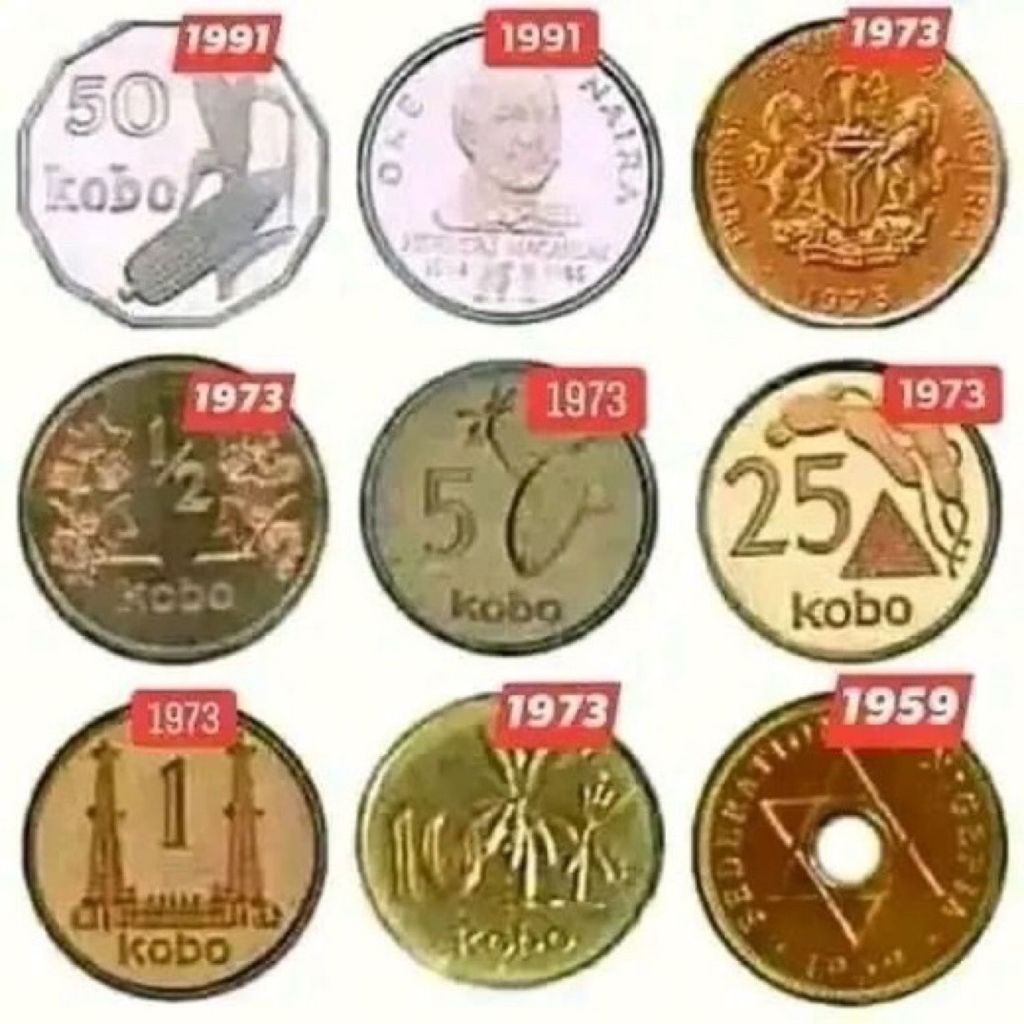
On April 1971 the Government announced chat to decimal currency system as from 1st January, 1973.
On the same date the CBN introduced 50 kobo, 1,5,10 and 20 naira respectively
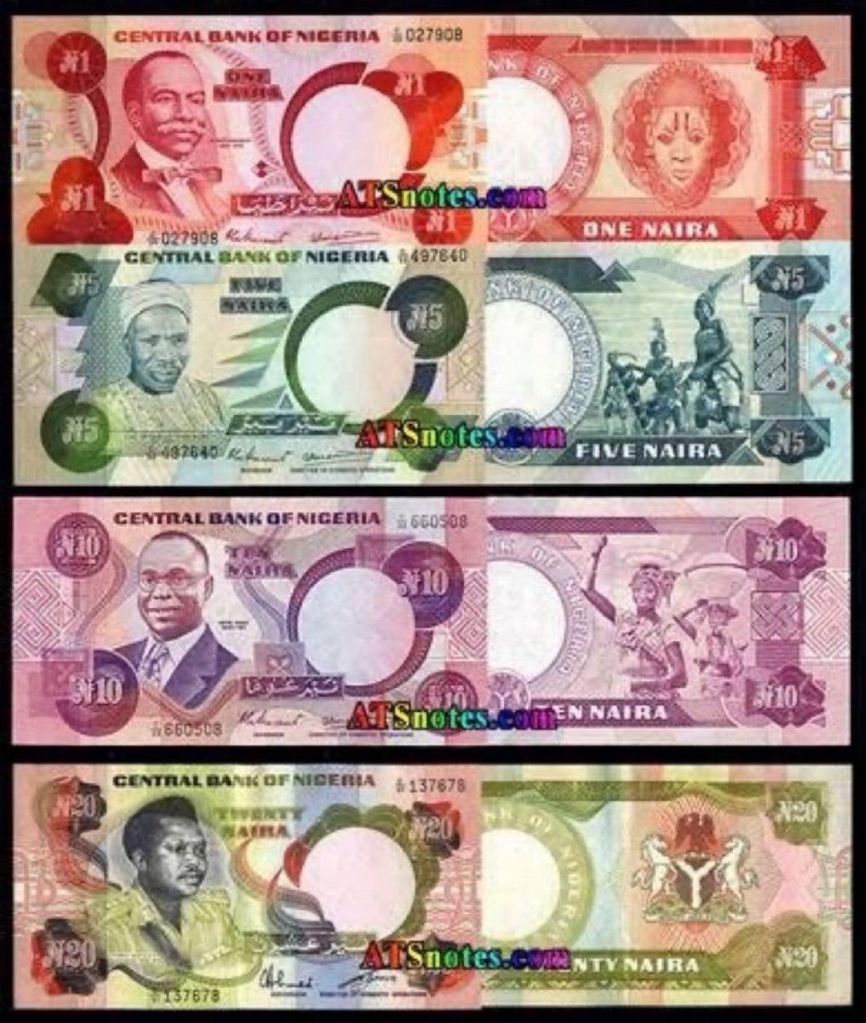
In the year 1991, 50 naira notes were issued and Al’s followed by 100 naira in the year 1999, 200 naira notes in the year 2000

In the year 2001 the 500 naira note was introduced and 1000 naira note was announced in the year 2005 which is currently the highest denomination of the naira

As at February 28, 2007 polymer notes were introduced.
The idea of the CBN was to make the notes smaller and durable. The notes affected by the CBN polymer policy were 5, 10, 20, and 50 naira notes by the then CBN governor Sanusi lamido Sanusi in 2009

If you learnt something new, don’t forget to give us a follow
 PIONEER NEWS