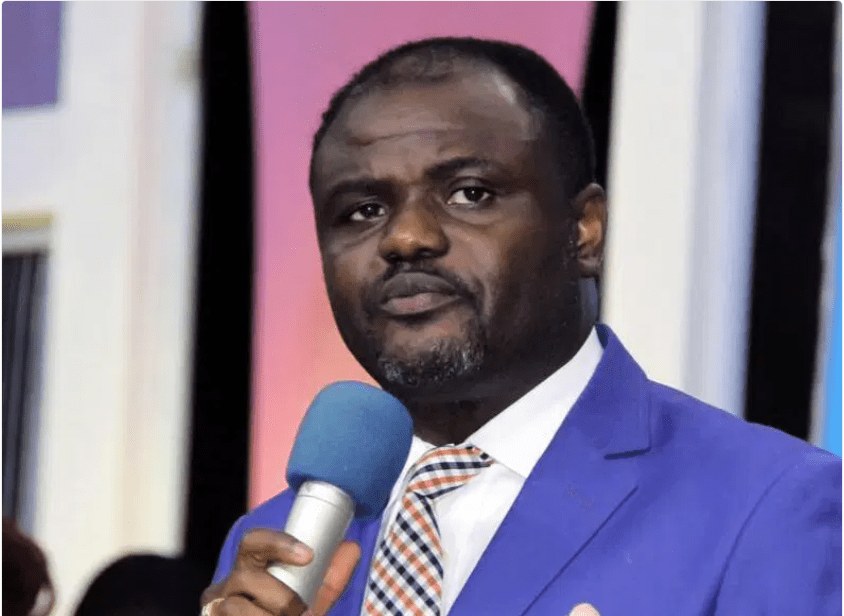
In a statement that has ignited a firestorm of reactions across Nigeria, renowned preacher Pastor Abel Damina has declared that smoking cigarettes and drinking alcohol are not sins. This bold proclamation was shared on Vanguard Newspaper’s official X (formerly Twitter) handle, quoting the pastor’s controversial stance.
Pastor Damina, the General Overseer of Power City International, is no stranger to provocative teachings, often challenging conventional religious doctrines. In his latest sermon, he emphasized that many behaviors traditionally condemned by religious communities are not explicitly classified as sins in the Bible.
“Smoking and drinking are cultural issues, not spiritual ones,” Pastor Damina reportedly stated. “It is the abuse of substances and the inability to exercise self-control that can lead to sin.”
The statement has since gone viral, with Nigerians taking to social media platforms to express divergent opinions. While some applauded the pastor for what they termed “liberating teachings,” others criticized him for allegedly downplaying the moral and health implications of smoking and drinking.
Prominent religious leaders and scholars have also weighed in on the discussion. Bishop Samuel Olumide of the Christian Integrity Mission countered Pastor Damina’s stance, saying, “As spiritual leaders, we must not only interpret the Bible but also consider the ethical and societal impact of our teachings.”
Health experts have also chimed in, warning against normalizing habits like smoking and drinking due to their severe health risks. Dr. Grace Adebayo, a public health advocate, stated, “While the morality of these habits may be debated, the health consequences are indisputable. Leaders should be cautious about how they influence public perception.”
Pastor Damina’s remarks are not his first foray into controversial territory. Over the years, he has garnered a reputation for challenging traditional doctrines, urging his congregation to approach faith with logic and a deeper understanding of biblical texts.
As the debate rages on, questions about the intersection of religious teachings, cultural norms, and personal choices have come to the forefront. Whether Pastor Damina’s assertions will spark a broader reevaluation of traditional beliefs or remain a polarizing topic among Nigerians remains to be seen.
What are your thoughts on Pastor Damina’s position? Is this a step toward modernizing religious perspectives or a dangerous deviation from established moral principles? Let us know in the comments.
 PIONEER NEWS