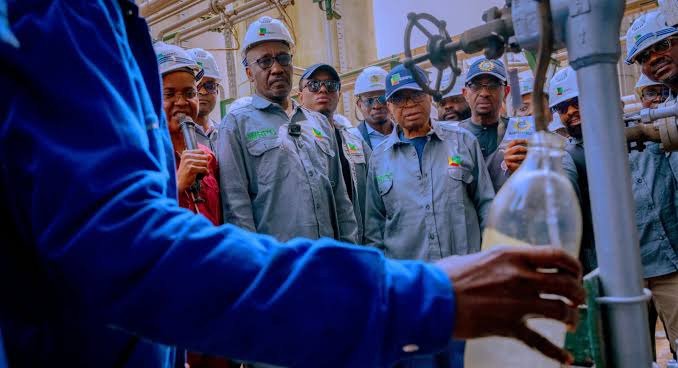
In an exclusive report that has sent ripples through Nigeria’s oil and gas sector, Sahara Reporters revealed on its official X (formerly Twitter) handle that Mele Kyari, the Group Chief Executive Officer of the Nigerian National Petroleum Company Limited (NNPC), has made a last-minute move to extend his tenure. The controversial decision? Reopening the Warri Refinery—an asset critics argue lacks the capacity to produce petrol.
According to the report, Kyari’s strategy is allegedly aimed at currying favor with President Bola Ahmed Tinubu by showcasing progress in Nigeria’s ailing refinery sector. However, industry insiders and skeptics are questioning the timing and the refinery’s true readiness to contribute meaningfully to the country’s fuel needs.
The Warri Refinery, once a key player in Nigeria’s refining capacity, has been dormant for years, plagued by underinvestment, poor maintenance, and allegations of mismanagement. Reports indicate that while Kyari has reopened the facility, it currently lacks the infrastructure and capacity to produce petrol, the commodity Nigerians most desperately need to combat the high cost of fuel following the removal of subsidies.
Critics have accused Kyari of using the refinery’s reopening as a political ploy rather than a genuine effort to revitalize the nation’s refining capabilities. Sahara Reporters’ investigation points to a broader narrative of desperation within the NNPC leadership as they navigate a challenging landscape of public scrutiny and the government’s reform agenda.
The announcement has drawn mixed reactions from industry experts and Nigerians alike. Some have praised Kyari for attempting to breathe life into the refinery, describing it as a “bold move” to revive Nigeria’s refining sector. Others, however, view it as a hollow gesture designed to impress the presidency rather than address the pressing fuel crisis.
“Reopening a refinery that can’t refine petrol is like painting over cracks in a crumbling wall,” said an anonymous oil industry analyst. “It may look good from the outside, but it doesn’t solve the underlying problems.”
Kyari’s tenure at the NNPC has been marked by bold reforms, but also significant controversies, including allegations of opacity in the company’s operations. With the Tinubu administration prioritizing economic reforms and transparency, Kyari’s latest move appears to be a calculated risk to secure his position in the evolving power dynamics of Nigeria’s oil sector.
As Nigerians await further developments, one question looms large: Is this a genuine step toward solving the nation’s refining woes, or merely a desperate gambit to extend a tenure running out of time?
Stay tuned as we delve deeper into this unfolding story, exploring its implications for Nigeria’s oil and gas sector, governance, and the everyday lives of citizens grappling with the high cost of fuel.
 PIONEER NEWS