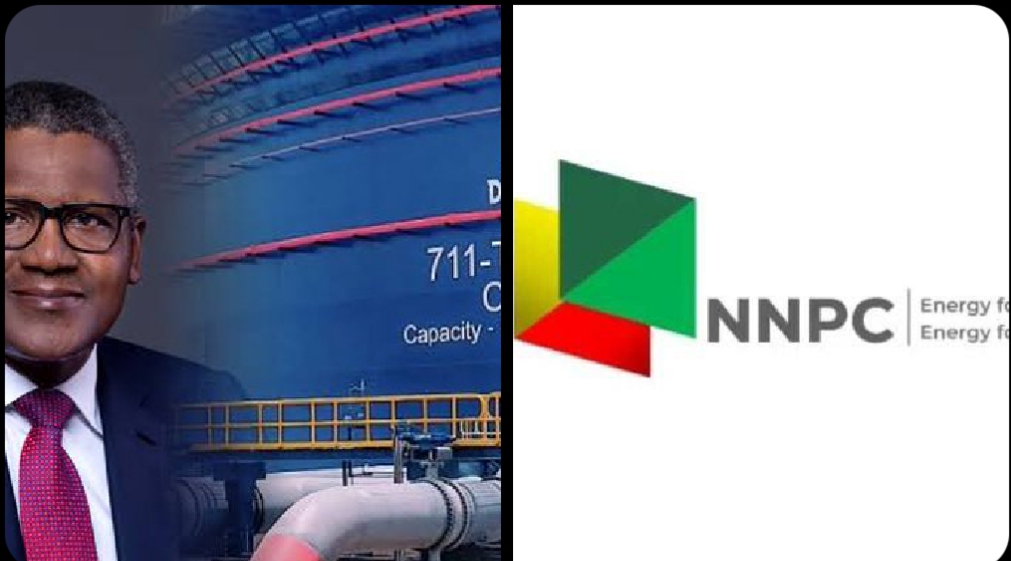
The Independent Petroleum Marketers Association of Nigeria (IPMAN) has shed light on the recent drop in petrol prices, crediting it to heightened competition between the Dangote Refinery and the Nigerian National Petroleum Corporation (NNPC). The association shared this perspective through the popular platform, X (formerly Twitter), via the official handle of Nigerian Stories.
According to the post, IPMAN stated, “The competition between Dangote Refinery and NNPC is the reason for the petrol price drop.” This development has sparked widespread reactions among Nigerians, who have been grappling with the ripple effects of fluctuating fuel prices on the economy.
The Dangote Refinery, which commenced operations earlier this year, has positioned itself as a game-changer in Nigeria’s oil and gas sector. With its capacity to refine 650,000 barrels of crude oil daily, it has disrupted the longstanding monopoly of the NNPC. The competition between these two industry heavyweights is reportedly forcing both players to adjust their strategies, resulting in a favorable impact on the pump price of petrol.
Industry experts have weighed in on the situation, hailing the development as a positive shift towards market-driven pricing. “This is the kind of competition we need to stabilize the market. It is a win-win for the average Nigerian, who has been burdened by high fuel costs,” said an energy analyst.
The drop in petrol prices comes as a welcome relief for citizens, as transportation and production costs are expected to ease slightly. However, the sustainability of this price reduction is a subject of debate, with concerns about external factors such as crude oil prices and foreign exchange rates.
Some stakeholders have called for the Federal Government to further liberalize the downstream sector, arguing that healthy competition will foster innovation and efficiency, ultimately benefiting the populace.
The announcement has ignited discussions across social media platforms. While some Nigerians expressed optimism about the positive effects of competition, others remain skeptical, citing previous instances of fleeting relief in fuel prices.
As Dangote Refinery and NNPC continue their silent tug-of-war, the spotlight remains on how their rivalry will shape the future of Nigeria’s energy landscape. For now, Nigerians can only hope that this drop in petrol prices signals the beginning of a more affordable and competitive energy sector.
 PIONEER NEWS