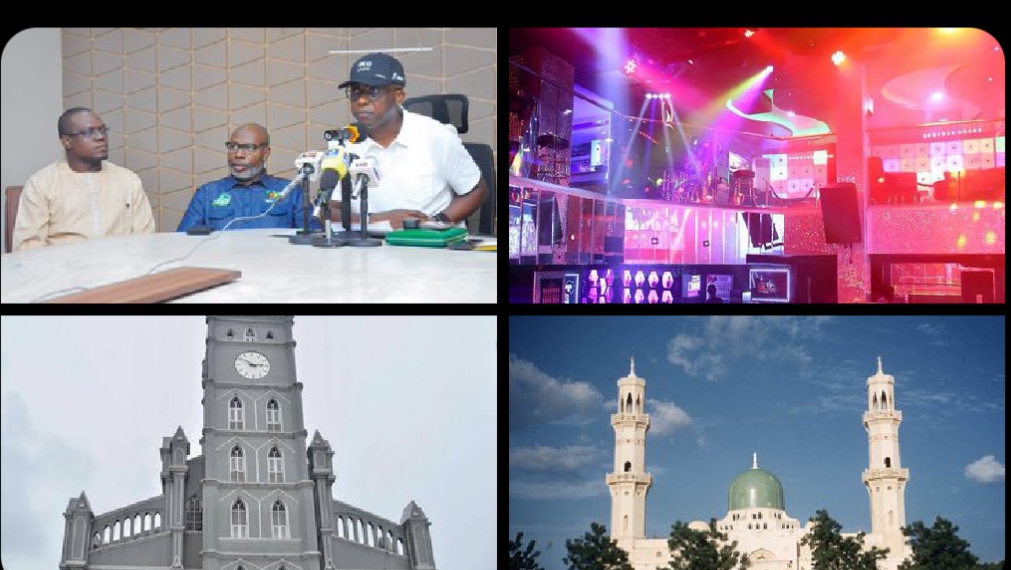
In a move that has sparked intense debate, the Lagos State Government has officially mandated permits for the use of amplified sound in nightclubs and worship centres across the state. The announcement was made through the official X handle of Nigerian Stories, catching the attention of residents and stakeholders alike.
This regulatory measure, aimed at curbing noise pollution in the bustling megacity, underscores the government’s commitment to balancing urban vibrancy with the need for public order and environmental harmony. Nightclubs and religious institutions, often at the heart of Lagos’s cultural and social life, will now be required to obtain official permits before using loudspeakers, amplifiers, and other sound equipment.
The directive has generated a whirlwind of reactions on social media. While some applaud the government’s effort to address noise pollution, others view it as an infringement on personal freedoms and the right to worship.
Critics argue that the measure disproportionately targets religious centres, which play a significant role in the lives of Lagosians, while others believe it could stifle the city’s nightlife and entertainment industry—a key driver of Lagos’s economy.
A user commented, “This is a bold step to bring sanity to our communities. Noise pollution has been a menace for too long.” Another retorted, “Is this really the priority right now? Lagos has bigger issues to address.”
Details about the process for obtaining the permits and the penalties for non-compliance remain unclear. Analysts have called for transparency and fairness in enforcement, emphasizing the need to avoid favoritism or targeting specific groups.
Environmental experts have lauded the initiative, pointing out that excessive noise poses health risks, including hearing loss, stress, and sleep disturbances. However, they stress that public education and dialogue with stakeholders are essential for the success of such policies.
This move aligns with Lagos State’s broader environmental reforms aimed at creating a more livable urban environment. The government has recently introduced measures to tackle waste management, air quality, and traffic congestion, making it clear that it intends to leave no stone unturned in its quest for sustainable urban development.
As Lagosians digest this breaking news, one question lingers: Will this policy be the long-awaited solution to noise pollution, or will it ignite a storm of resistance from those who feel their freedoms are being curtailed?
What are your thoughts on this bold move by the Lagos State Government? Is it a step in the right direction or a potential misstep? Share your opinions in the comments.
 PIONEER NEWS