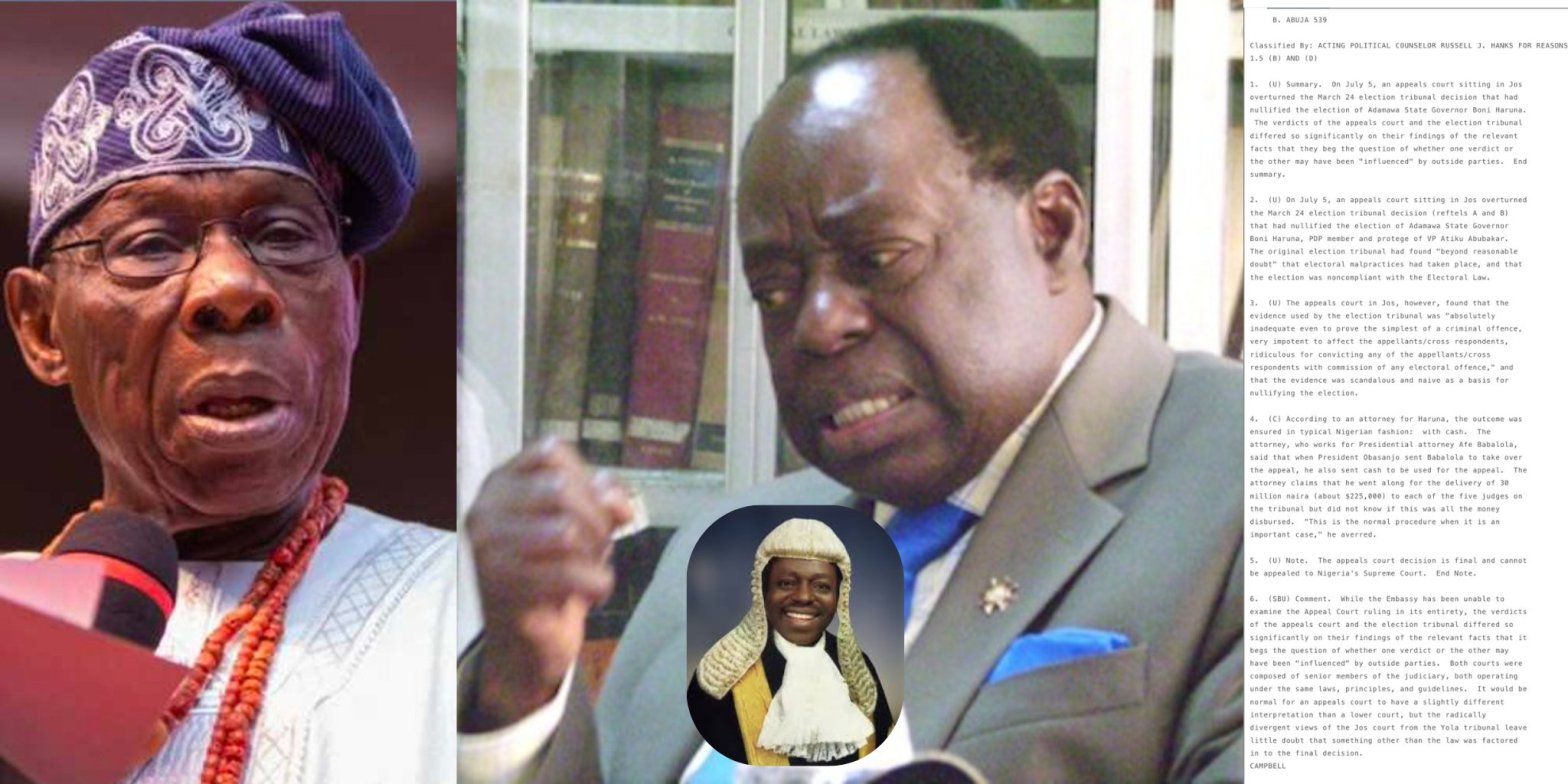
Sahara Reporters has stirred a storm on social media with a bombshell revelation about alleged judicial corruption involving prominent figures in Nigeria’s legal and political circles. The media outlet, known for its investigative journalism, posted on its official X (formerly Twitter) account, citing leaked Wikileaks cables. The report claims that legal luminary Afe Babalola and former President Olusegun Obasanjo allegedly influenced a Court of Appeal ruling in 2004 with a hefty cash payment of N30 million.
The post, which includes a link to the purported Wikileaks document, has sparked heated reactions across the platform. One notable response came from X user Marcus Garvey, who encouraged skeptics to examine the evidence for themselves by sharing a direct link to the Wikileaks cable: wikileaks.org/plusd/cables/0….
The allegations, if true, paint a damning picture of judicial manipulation at the highest levels of governance. According to the Wikileaks document, the payment was allegedly orchestrated to secure a favorable judgment in a case of significant political and legal consequence. While the full details of the case and the judgment remain under scrutiny, this revelation raises critical questions about the integrity of Nigeria’s judiciary and the extent of political interference during Obasanjo’s administration.
The revelation has ignited widespread debate online. Many users have expressed outrage at the alleged collusion between political elites and judicial figures, calling for an independent investigation. Marcus Garvey’s reaction underscores the weight of the evidence, with his post suggesting that the cables provide undeniable proof of the alleged bribery.
One user commented, “This is why justice is elusive in Nigeria. If those at the top can buy rulings, what hope is there for the common man?” Another echoed similar sentiments, demanding, “When will Nigerians rise up against such brazen corruption?”
This latest disclosure highlights the critical need for accountability and transparency in Nigeria’s judicial system. The alleged actions of Afe Babalola, a revered legal icon, and Obasanjo, a two-term president, represent a significant betrayal of public trust if proven true. It also brings to light the enduring challenge of ensuring judicial independence in a country where politics often blurs the lines between law and governance.
While Sahara Reporters’ post has reignited discussions about judicial corruption in Nigeria, the authenticity and implications of the Wikileaks document remain to be officially confirmed. Both Afe Babalola and Olusegun Obasanjo have yet to comment on the allegations. Civil society groups and legal experts are calling for a thorough investigation into the claims to uphold the rule of law and restore public confidence in the judiciary.
As Nigerians await further developments, the question remains: will this revelation lead to meaningful reforms or fade into the archives of unresolved controversies?
The ball is now in the court of investigative agencies and civil society to pursue the truth and hold those responsible accountable, no matter how powerful they may be.
 PIONEER NEWS