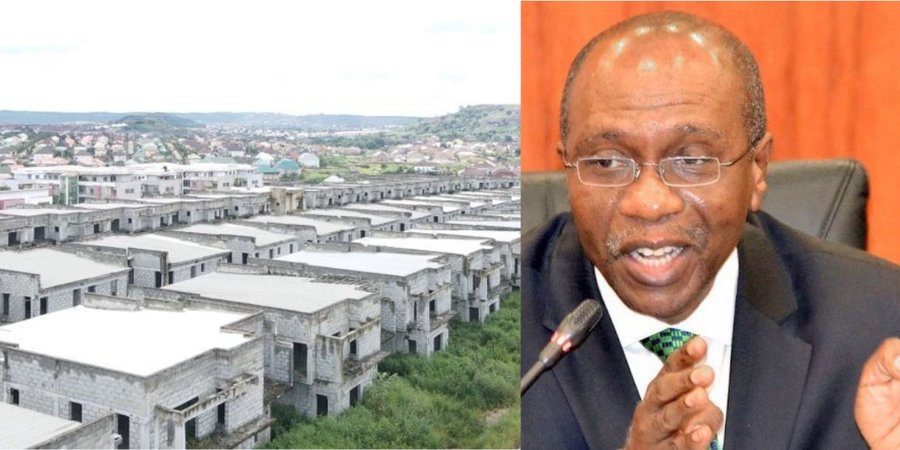
In a shocking revelation that has sent ripples across Nigeria, former Central Bank Governor Godwin Emefiele has been identified as the high-ranking official behind the ownership of 753 luxury duplexes in an exclusive Abuja estate recently forfeited to the Economic and Financial Crimes Commission (EFCC).
According to an investigative report by Sahara Reporters, the properties—located in one of the most prestigious neighborhoods in the nation’s capital—represent the pinnacle of unchecked corruption and misuse of public office. This disclosure adds another layer to the unfolding saga of financial scandals that have plagued the country’s elite.
The sheer magnitude of the forfeiture is unprecedented. The estate, a sprawling symbol of opulence, was allegedly built using funds siphoned from government coffers during Emefiele’s tenure as Central Bank Governor. Sources within the EFCC have described the properties as “monuments of greed,” acquired through intricate schemes designed to evade scrutiny.
An EFCC insider, who spoke on condition of anonymity, revealed that the discovery was part of an ongoing investigation into illicit financial flows involving top government officials. “This is just the tip of the iceberg,” the source hinted, suggesting that more revelations about misappropriated wealth might soon come to light.
This revelation raises critical questions about accountability, transparency, and the abuse of power within Nigeria’s financial and political systems. Critics argue that the central bank’s role as a custodian of the nation’s economy has been undermined by leadership mired in corruption.
Civil society groups and anti-corruption advocates are already demanding a full-scale probe into Emefiele’s activities while in office. “This is not just about seizing assets; it’s about restoring the trust of Nigerians in public institutions,” said Dr. Halima Yusuf, an anti-corruption activist. “We need to see swift justice and a strong signal that such impunity will no longer be tolerated.”
Emefiele, who was controversially suspended from office earlier this year, has remained a polarizing figure in Nigeria’s political landscape. His recent legal troubles include allegations of economic sabotage and mismanagement of public funds. With this latest revelation, he faces an uphill battle to clear his name amid mounting evidence of financial impropriety.
While the EFCC continues its investigation, legal experts predict a protracted court battle over the ownership of the properties. However, many are optimistic that the forfeiture marks a turning point in Nigeria’s fight against corruption.
The news has ignited a storm of reactions from Nigerians, with many taking to social media to express outrage over the scale of the alleged misconduct. “How does one individual amass 753 duplexes in a country where millions can’t afford a single room?” wrote one Twitter user.
Others have called for systemic reforms to ensure such abuses are not repeated. “This isn’t just about Emefiele,” said a political analyst. “It’s about addressing the structural loopholes that allow such corruption to flourish.”
As Nigerians digest the gravity of this revelation, the spotlight is firmly on the EFCC to deliver justice. For a nation grappling with economic hardship, the forfeiture serves as a grim reminder of the high cost of corruption and the urgent need for accountability at the highest levels of government.
This developing story continues to unfold, with many eager to see whether this case will set a precedent for the relentless pursuit of justice in Nigeria’s anti-corruption war.
 PIONEER NEWS