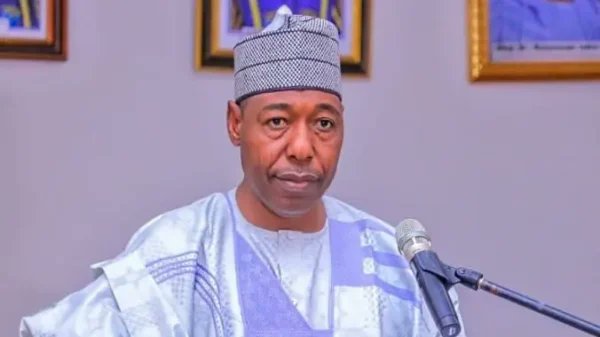
In a startling revelation, Governor Babagana Zulum of Borno State has raised alarms over the potential implications of the proposed tax reform bills. Taking to its official X (formerly Twitter) handle, Daily Trust shared Zulum’s warning, highlighting that the state may face an unprecedented inability to pay salaries if the controversial tax reforms are passed into law.
The post, which quickly went viral, read: “We Won’t Be Able to Pay Salaries If Tax Reform Bills Scale Through – Gov Zulum”. This declaration has ignited heated debates across social media, with users expressing diverse opinions on the potential impact of the reforms on governance and regional financial sustainability.
Among the many reactions, one by X user Mazi Uche Okeodo stood out, sparking a flurry of engagement. Okeodo commented, “The hidden truth about how a section of the country is sustaining another will soon be revealed.” His remark hinted at underlying tensions and debates about fiscal federalism and resource allocation among Nigeria’s geopolitical zones.
Zulum’s statement underscores the ongoing debates over the federal government’s push for tax reform as a strategy to boost internal revenue generation. Critics argue that while reforms are essential, they could disproportionately affect less economically robust states, plunging them into financial distress.
Analysts suggest that states heavily reliant on federal allocations, such as Borno, could face severe challenges in meeting their obligations, including salary payments, without sufficient alternative revenue streams. This has raised concerns about the fairness and feasibility of implementing sweeping tax reforms without considering the unique financial realities of individual states.
Okeodo’s response has amplified a long-standing narrative surrounding perceived inequalities in resource distribution and economic contributions among Nigeria’s regions. His statement appears to challenge the notion of unity in diversity, instead bringing to the forefront divisive discussions on self-sufficiency and dependency within the federation.
Other users chimed in, with some supporting Okeodo’s sentiments, while others criticized it as unproductive and inflammatory. The controversy has shone a spotlight on the growing discontent among citizens regarding governance, resource management, and regional autonomy.
As the tax reform bills inch closer to potential passage, stakeholders will likely intensify their advocacy for or against the proposed policies. Governors like Zulum are expected to continue voicing their concerns, emphasizing the need for a balanced approach that protects economically weaker states while achieving the desired fiscal reforms.
The unfolding debate highlights the need for constructive dialogue and collaborative policymaking to avoid deepening Nigeria’s already fragile unity. Whether Zulum’s warning will trigger a reevaluation of the reforms or serve as a rallying cry for dissenting voices remains to be seen.
What’s clear, however, is that the stakes are high, and the conversation is far from over.
 PIONEER NEWS