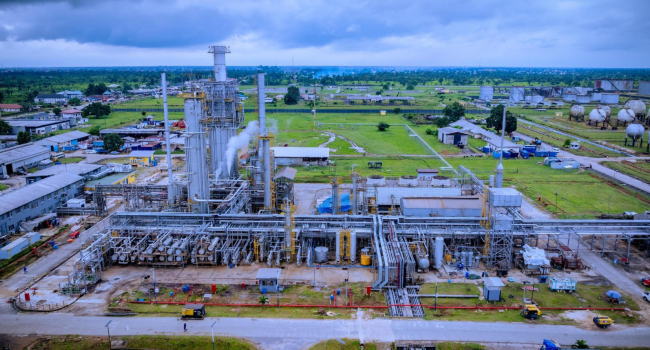
In a recent announcement on its official X handle, Channels Television disclosed a significant revelation made by the Petroleum Products Retail Outlets Owners Association of Nigeria (PETROAN). The association stated that the Premium Motor Spirit (PMS) produced by the recently resumed Port Harcourt Refinery is priced ₦75 per litre higher than the PMS sold by the Dangote Refinery.
This announcement has stirred debates across social media platforms, with many Nigerians questioning the pricing disparity between the two refineries. PETROAN’s disclosure has sparked fresh concerns about the viability and economic impact of the Port Harcourt Refinery, which recently resumed production after years of inactivity and multi-billion-naira rehabilitation.
Adding to the discourse, a post by a user, The Truth Only, on the X platform ridiculed the situation, sarcastically commenting:
“Lolx. You believe a government that started operating Nigerian Airways by painting an Ethiopian Airways aircraft?”
The comment alludes to past controversies surrounding government projects, reflecting public skepticism about the transparency and efficiency of state-led initiatives.
While some Nigerians applaud the resumption of the Port Harcourt Refinery, others are alarmed by the higher production costs compared to its privately-owned counterpart, the Dangote Refinery, which has been lauded for its efficiency and market competitiveness.
The difference in pricing raises critical questions about the refinery’s operational cost structure, capacity utilization, and management practices. Analysts argue that the higher cost may stem from inefficiencies, outdated infrastructure, or inflated rehabilitation costs.
Furthermore, the development fuels ongoing discussions about the government’s role in managing critical sectors versus the growing dominance of private players like the Dangote Group. It also highlights broader concerns about Nigeria’s energy self-sufficiency and the potential for pricing disparities to burden consumers further amidst rising living costs.
The reactions on social media reflect a mix of disappointment and satire, with many users expressing frustration over what they perceive as another example of government inefficiency. Others have called for greater transparency in the operations and pricing mechanisms of the Port Harcourt Refinery.
The government and PETROAN are yet to release a detailed breakdown of the pricing structure, leaving many to speculate on the underlying factors contributing to the ₦75 disparity.
As Nigerians continue to navigate an era of subsidy removal and fluctuating fuel prices, the spotlight remains on the Port Harcourt Refinery to prove its economic value. Stakeholders will be closely watching to see if its operations can be optimized to rival or even match the cost-effectiveness of the Dangote Refinery.
This unfolding development underscores the importance of accountability and efficient resource management in tackling Nigeria’s energy challenges. The question remains: will the Port Harcourt Refinery rise to the occasion, or will it become another symbol of misplaced public trust?
 PIONEER NEWS