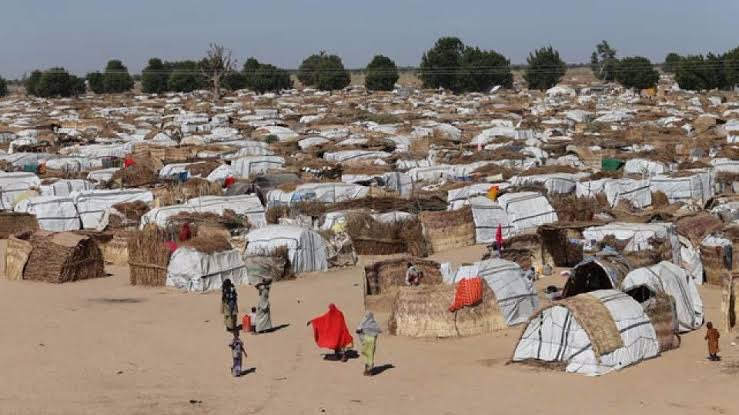
A recent development at an Internally Displaced Persons (IDP) camp in Borno State has drawn attention after a man reportedly expanded his marital status from one wife to four during his stay. The surprising turn of events was shared on the official X handle of Nigerian Stories, leaving many Nigerians both amused and intrigued.
According to the post, the man arrived at the camp with a single wife but has since added three more women to his household while living in the IDP facility. This revelation has sparked debates on social media, with some questioning the ethics and practicality of such actions given the challenging circumstances within IDP camps.
Reacting to the development, Borno State Governor Babagana Umara Zulum expressed concern over the incident. During a routine visit to one of the IDP camps, the governor reportedly criticized the lack of structure and oversight that allowed such behavior. He emphasized that the primary focus of the camps should be on rehabilitation, education, and skill acquisition, not on actions that may undermine the purpose of the humanitarian intervention.
“This is a clear case of misplaced priorities,” Governor Zulum lamented. “Our focus is on helping displaced persons rebuild their lives, not fostering behaviors that complicate already strained resources.”
This situation has highlighted broader issues within IDP camps, including overcrowding, inadequate resources, and the need for better management. While polygamy is culturally accepted in many parts of Nigeria, critics argue that such practices may hinder progress for families trying to recover from the trauma of displacement.
Social commentators have also weighed in, with some commending the man’s resilience in finding love despite dire circumstances, while others have expressed concerns about the well-being of the women and children involved.
Governor Zulum’s administration has been at the forefront of efforts to improve living conditions for displaced persons across Borno State. The state, which has been significantly affected by the Boko Haram insurgency, houses thousands of displaced individuals in camps and host communities.
However, this peculiar incident has sparked conversations about the need for strict regulations and community sensitization to ensure that the camps fulfill their intended purpose—helping individuals transition to normalcy and independence.
As the story continues to garner attention online, it serves as a reminder of the complexities surrounding humanitarian efforts and the diverse challenges faced by displaced populations.
 PIONEER NEWS