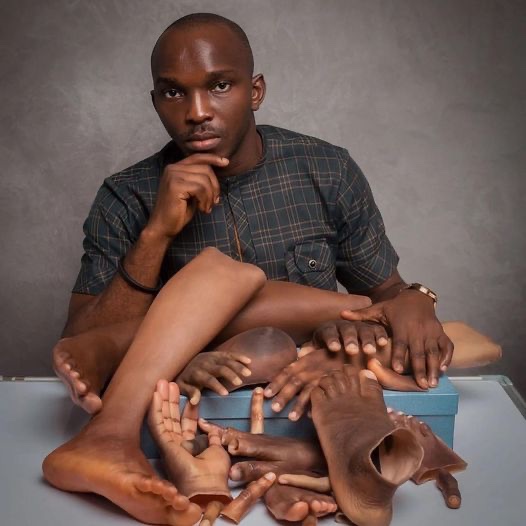
In a remarkable stride for inclusivity in prosthetics, Nigerian Stories has spotlighted the trailblazing work of John Amanam on its official X handle. Amanam, a Nigerian sculptor and visionary, has gained international recognition for creating hyper-realistic prosthetics designed specifically for people of African descent. As the first Nigerian to produce dark-skinned prosthetics tailored to Black amputees, Amanam is transforming not just lives, but the face of an entire industry.

A graduate of Fine and Industrial Arts from the University of Uyo, Amanam initially embarked on a career in sculpting with traditional artistic ambitions. However, a life-changing event—a close family member losing a limb—became a powerful catalyst, inspiring him to dedicate his skills to an underserved need in prosthetics. Observing the lack of realistic options for Black amputees, he began to create lifelike prosthetic limbs that not only restored physical appearance but also provided a sense of identity and dignity.
Amanam’s prosthetics are renowned for their attention to detail, color accuracy, and incredible resemblance to real skin. Crafted from high-quality silicone, each prosthesis is custom-made, considering the client’s unique skin tone, texture, and physical features. His groundbreaking work doesn’t merely fill a gap; it addresses a global demand for prosthetics that honor and reflect diversity. For Black amputees worldwide, his creations offer not just function but a newfound confidence that standard prosthetics often fail to deliver.
In a world where prosthetic options for people of color remain limited, Amanam’s artistry goes beyond aesthetics—it represents a commitment to cultural and personal identity. Through his skill and sensitivity, he is changing the way people view and experience prosthetics, making him a beacon of hope and pride within the African creative and medical communities.
John Amanam’s journey is a powerful testament to how art and compassion can blend to meet profound social needs. His work is more than just functional; it’s an empowering statement that the field of prosthetics can—and should—celebrate all shades and identities.
 PIONEER NEWS