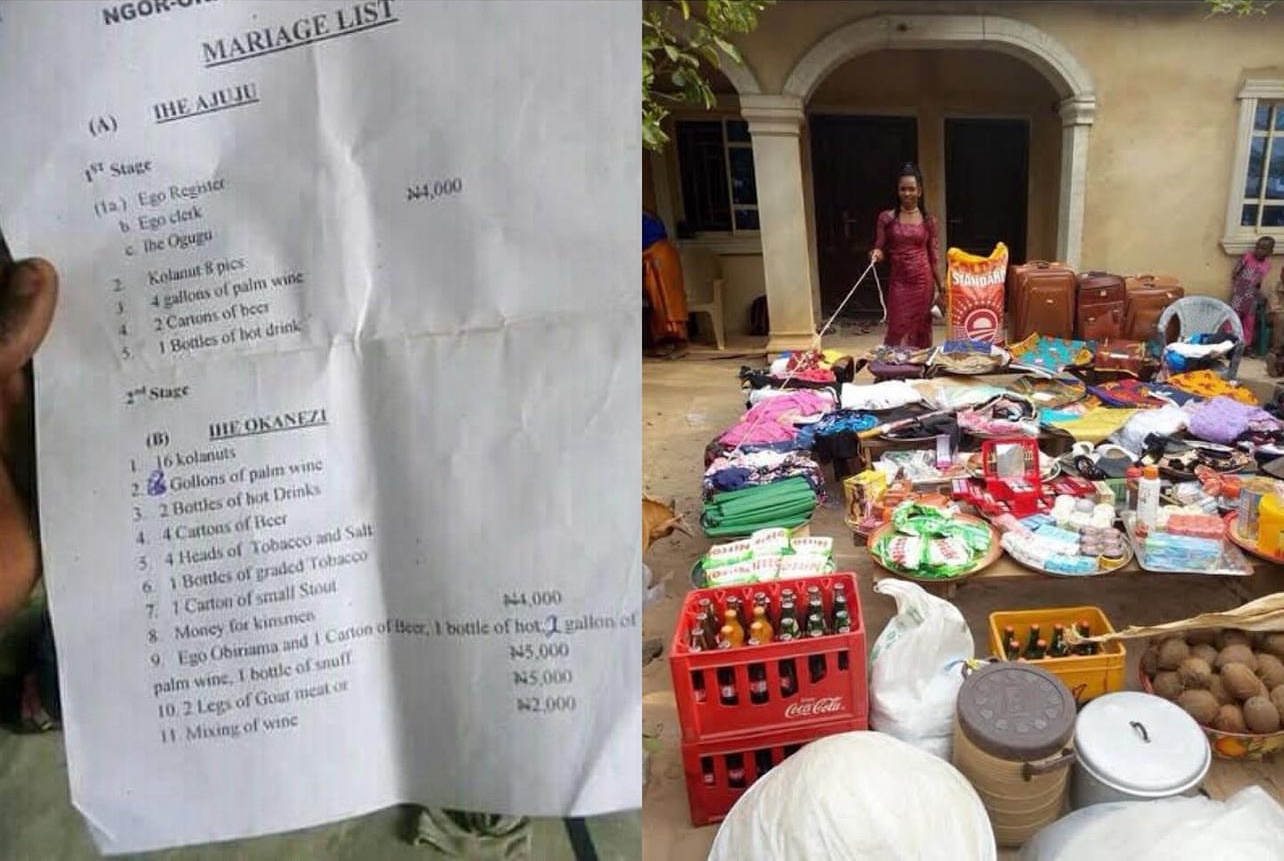
In a surprising turn of events, Nigerian men are reportedly scrutinizing marriage lists from multiple prospective brides to find the most budget-friendly option amid the nation’s soaring economic challenges. Nigerian Stories, a popular news outlet on X (formerly Twitter), recently shared this revelation in a post that has since sparked widespread conversation online.
According to Vanguard Nigeria, men are feeling the financial pinch now more than ever, with wedding traditions and bride-price lists adding pressure. These lists often outline customary gifts and requirements from the groom’s family to the bride’s, which can range from cash to clothing, drinks, livestock, and other essentials.
Traditionally, marriage lists are seen as a respectful homage to the bride’s family and a key part of cultural heritage. However, the escalating costs have turned these lists into a point of contention, particularly as the country grapples with inflation and a high cost of living.
The post from Nigerian Stories quickly gained traction on social media, with many users voicing their opinions. Some men expressed solidarity, citing the difficulty of balancing family obligations with marriage expenses. “Marriage shouldn’t be a financial sentence,” one user remarked, while others joked about starting an “affordable marriage list” trend.
Women, on the other hand, had mixed reactions. Some sympathized with the men, suggesting that families adapt traditional expectations to modern economic realities. Others were concerned, arguing that this shift might undermine cultural values and traditions that hold deep significance.
Nigeria’s rich cultural diversity means that marriage customs vary across regions, with some ethnic groups requiring more elaborate lists than others. In some cases, families have started revisiting and adjusting these lists to ease financial burdens on prospective grooms, while still honoring cultural traditions.
For many Nigerian families, the marriage list is not solely about finances but serves as a way to establish goodwill and respect between families. However, with economic hardship at an all-time high, this trend of “shopping around” for affordable marriage lists may lead to a new wave of cultural evolution within marriage traditions.
As the story continues to spark debate, it highlights how economic conditions can shape not only personal decisions but also cultural practices, reflecting the resilience and adaptability of Nigerian society amid challenging times.
 PIONEER NEWS