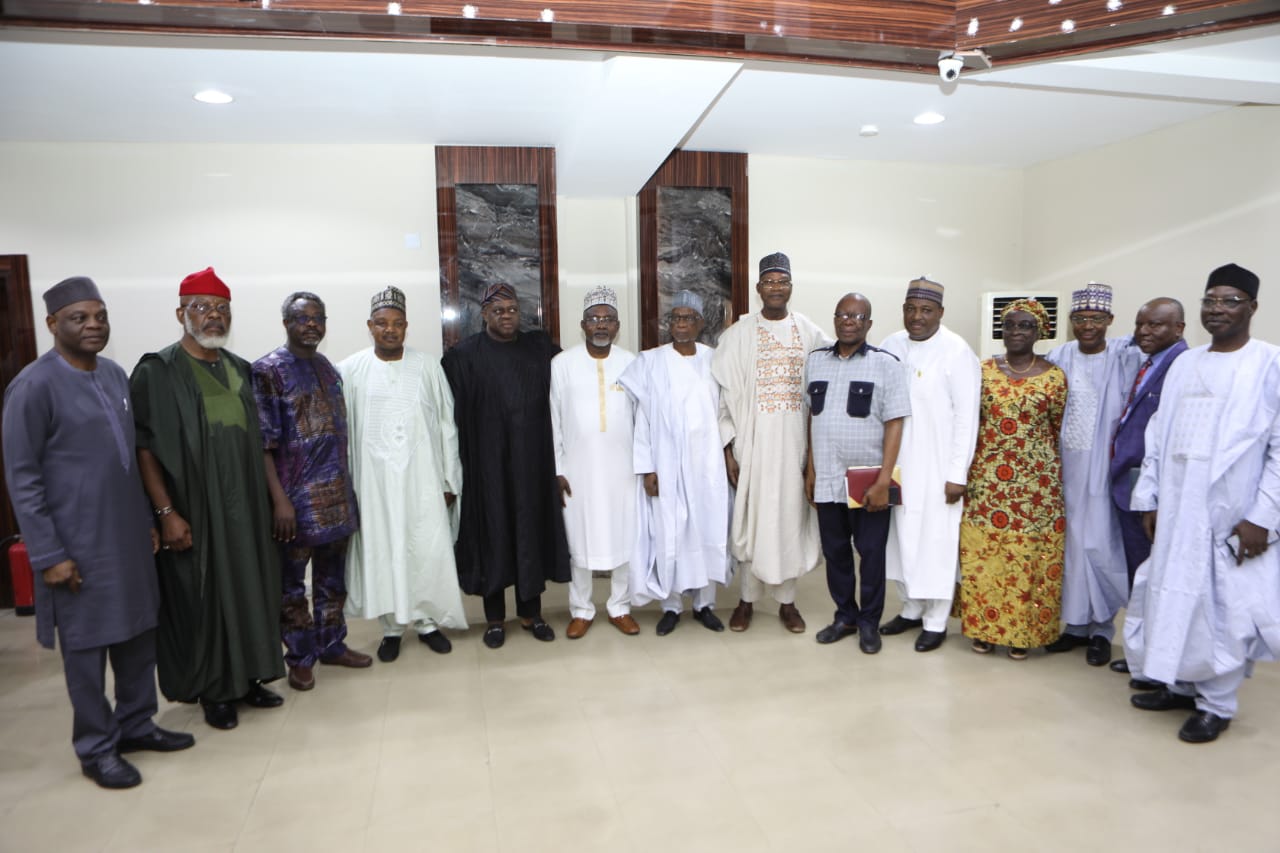
In a decisive move to resolve the prolonged university crises, the Federal Government has established a new renegotiation committee to address the contentious 2009 agreement with university-based unions. The Honourable Minister of Education, Professor Tahir Mamman, announced this during a formal inauguration ceremony, signaling a new chapter for Nigeria’s higher education sector.

Professor Mamman emphasized the government’s commitment to education, describing it as “central to our national development.” He expressed optimism that the newly constituted committee, led by esteemed former Head of Service, Alhaji Yayale Ahmed, will bring a swift resolution to the long-standing impasse. The committee is tasked with concluding negotiations within the next three months, a move seen as critical to restoring stability to Nigeria’s universities.
“Patriotism and sincerity are essential in this renegotiation process,” Alhaji Yayale Ahmed remarked. He underscored the importance of collective responsibility and the need for cooperation from key government ministries to secure the necessary funding for university reforms. “We will work tirelessly to ensure that the concerns of the academic community are addressed, and the necessary financial commitments are made.”

University unions, long frustrated by the stalled negotiations, have expressed cautious optimism. The President of the Academic Staff Union of Universities (ASUU), Professor Emmanuel Osodeke, welcomed the formation of the committee. “We are ready for renegotiation and eager to collaborate with the government to bring lasting solutions,” Osodeke said, highlighting the union’s hope for a stable academic calendar moving forward.
This development marks a significant step toward ending the decade-long crisis that has plagued Nigeria’s university system, with both sides expressing a renewed sense of determination to create an environment where education can thrive once again.
With the backing of the Federal Government and a committed committee at the helm, stakeholders are hopeful that this initiative will finally put an end to the disruptions that have hampered Nigeria’s educational progress for too long.
 PIONEER NEWS