In a bold move to affirm its stance on political loyalty, the Rivers State Government has officially declared that the seats of defected lawmakers, including the faction led by Martin Amaewhule, remain vacant despite recent legal developments. This announcement was made following reports that a Court of Appeal ruling in Abuja had reinstated the lawmakers.
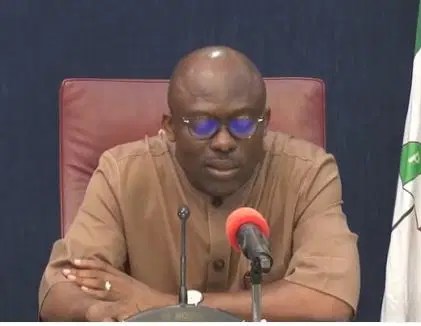
The Vanguard Newspaper took to its official X (formerly Twitter) handle to share the statement made by the Rivers State Attorney General and Commissioner for Justice, Israel Dagogo Iboroma, SAN. In his address, Iboroma dismissed claims that the Court of Appeal judgment reinstated Amaewhule and 26 other lawmakers to the Rivers State House of Assembly. He stressed that their defection from the Peoples Democratic Party (PDP) to the All Progressives Congress (APC) on December 11, 2023, resulted in the automatic forfeiture of their legislative seats.
Iboroma cited Section 109(1)(g) of the 1999 Constitution, which clearly stipulates that any lawmaker who defects from the political party on whose platform they were elected must vacate their seat. “The law is unambiguous,” he stated. “Once these lawmakers crossed party lines, their seats became vacant, and the Rivers State Government will uphold this constitutional provision without compromise.”
This development has sparked a political storm in Rivers State, as the Amaewhule-led faction had hoped that the Court of Appeal ruling would secure their positions in the Assembly. However, the government has remained firm in its interpretation of the law, signaling its intention to maintain the integrity of the Assembly by refusing to recognize defectors as legitimate members.
The Rivers State Government’s position underscores a broader debate about the implications of party defections and the consequences lawmakers face when switching allegiances. As political tensions heighten, this issue is likely to set a significant precedent for other states grappling with similar challenges. The fate of the affected lawmakers now lies in the hands of the judiciary, with many awaiting further legal clarification on their standing.
This case highlights the complexity of Nigeria’s political landscape, where party loyalty, constitutional mandates, and court rulings often collide, creating an atmosphere of uncertainty and contention in governance.
 PIONEER NEWS