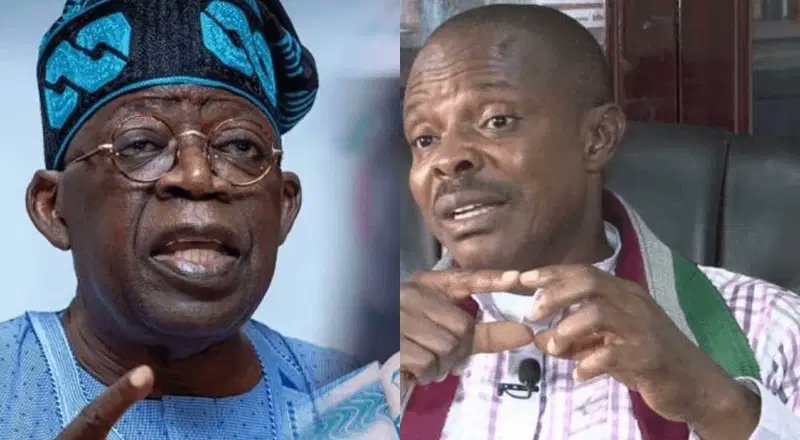
In a significant development, the Nigeria Labour Congress (NLC) President, Mr. Joe Ajaero, has revealed the underlying reasons behind the organized labour’s acceptance of the N70,000 minimum wage. According to Ajaero, this decision was made to avert a potential hike in fuel prices, following intense negotiations with the administration of President Bola Tinubu.
Taking to its official X (formerly Twitter) handle, Vanguard Newspaper broke the news of this agreement. Ajaero, while speaking to journalists yesterday, disclosed that the labour unions and the federal government reached a delicate compromise during their discussions. The primary concern for the labour movement, he explained, was not just about wage increments but about shielding Nigerian workers from further economic hardship, especially in the wake of rising fuel prices.
“We had to carefully weigh our options,” Ajaero stated. “The N70,000 minimum wage proposal was accepted not only because of the current economic situation but also to ensure that the government doesn’t resort to increasing fuel prices, which would have worsened the plight of Nigerians. We didn’t want workers to bear the brunt of another fuel price hike.”
This revelation underscores the complexity of the labour-government negotiations, where both sides had to make concessions to avoid further financial strain on Nigerian households. Labour unions had been at the forefront of protests and demands for better wages, especially following the recent removal of fuel subsidies that sent fuel prices soaring, leading to inflation and a higher cost of living.
Ajaero emphasized that while the N70,000 minimum wage may not be the ultimate solution to the economic challenges faced by Nigerian workers, it was a strategic move to stave off more severe impacts. “The government, through this wage agreement, has averted what could have been an unbearable situation for many families,” he noted.
This disclosure sheds light on the delicate balance between wage increases and economic policy decisions. While the minimum wage raise is seen as a victory for labour, it also highlights the difficult terrain of governance, where trade-offs are often necessary.
The Nigerian public awaits further details on how this new wage agreement will be implemented and whether it will lead to tangible improvements in their standard of living. As the conversation around economic reforms continues, all eyes will be on how both the government and labour unions navigate future challenges.
For more updates on this developing story, visit Vanguard Newspaper at vanguardngr.com.
 PIONEER NEWS