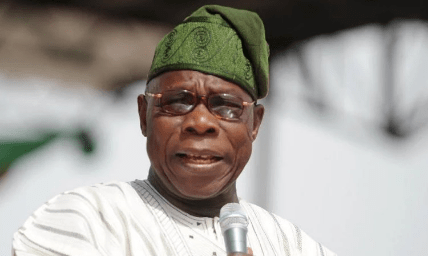
In a powerful and thought-provoking statement, former Nigerian President, Chief Olusegun Obasanjo, has once again sparked national conversation with his latest comments on the state of leadership in the country. Taking to his official X (formerly Twitter) handle, Obasanjo boldly declared, “Thieves cannot provide good governance.”
This fiery proclamation, which has quickly gained widespread attention, is seen by many as a reflection of Obasanjo’s dissatisfaction with the current state of governance in Nigeria. Known for his frankness and no-nonsense approach, Obasanjo has consistently spoken out against corruption and poor leadership, urging for greater accountability and transparency within the corridors of power.
The former President’s statement appears to echo his long-standing criticism of leaders who exploit their positions for personal gain, rather than prioritizing the welfare of the people. As Nigeria grapples with mounting economic challenges, insecurity, and allegations of corrupt practices within various tiers of government, Obasanjo’s message rings louder than ever.
Political analysts have already begun dissecting Obasanjo’s statement, interpreting it as a veiled critique of certain high-profile individuals within the political arena. Many are questioning whether the elder statesman is pointing fingers at specific officials or speaking in broader terms about the need for integrity in governance.
Obasanjo’s unflinching stance on corruption has been a hallmark of his legacy, both as a military head of state and as a civilian president. His latest remarks serve as a clarion call to Nigerian leaders, reminding them that genuine progress and development cannot be achieved if those in power are more interested in self-enrichment than in serving the people.
As the conversation continues to unfold across the nation, it remains to be seen how current political leaders will respond to this striking message from one of Nigeria’s most respected voices in governance.
With the nation at a crossroads, Obasanjo’s words may very well inspire a renewed push for ethical leadership and a demand for accountability from those who hold the reins of power.
The former president’s statement serves as a timely reminder that the quest for good governance in Nigeria can only be achieved through honesty, integrity, and a true commitment to the common good.
Conclusion: As the nation reflects on Obasanjo’s words, the call for leaders to rise above corrupt tendencies and prioritize the needs of the people grows louder. The road to genuine progress is clear—Nigeria needs leaders who are committed to transparency, accountability, and ethical governance.
 PIONEER NEWS