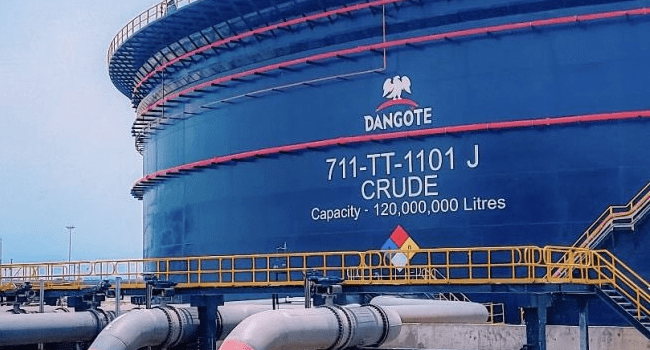
In a groundbreaking development that could reshape Nigeria’s oil market, the Nigerian National Petroleum Company Limited (NNPCL) has confirmed that Dangote’s much-anticipated petrol will flood the market starting September 15. This revelation, announced via Channels Television’s official X (formerly Twitter) handle, marks a significant milestone for Nigeria’s energy sector as the largest refinery in Africa begins operations.
The NNPCL disclosed that the price of petrol from the Dangote Refinery will not be fixed by the government but will instead be dictated by market forces. This dynamic pricing model is expected to introduce competition, potentially easing fuel shortages and stabilizing the volatile petrol market in the country.
“The arrival of Dangote’s petrol on the market is a game-changer for Nigeria’s fuel supply. Prices will be determined by market conditions, ensuring transparency and competitiveness,” an NNPCL spokesperson stated. This development is expected to end Nigeria’s long-standing reliance on imported fuel and boost domestic production, with the Dangote Refinery set to supply a large portion of the nation’s fuel needs.
As the countdown to September 15 begins, industry experts are watching closely to see how the refinery’s entry into the market will impact fuel prices and availability. Many are optimistic that this new chapter will alleviate the pressure on Nigerians, who have been grappling with fluctuating fuel prices and supply shortages for years.
The NNPCL’s statement underscores the strategic importance of this move, which comes at a time when global oil prices remain unpredictable. With the refinery expected to produce about 650,000 barrels per day, Nigeria stands to benefit immensely from this surge in local production, potentially lowering the cost of transportation and other fuel-dependent sectors.
The prospect of fuel prices being dictated by market forces has sparked widespread debate, with some analysts predicting an initial price hike due to the dynamics of demand and supply. However, others argue that the increased competition could eventually drive prices down as more refineries come online and the market adjusts.
As Nigeria gears up for this monumental shift, Dangote’s refinery is poised to revolutionize not just the nation’s petroleum industry but also its economy at large. The entry of locally-produced petrol is expected to ease the financial burden on the government, which has historically spent billions of dollars on fuel subsidies, and give Nigerians more control over fuel prices in the long term.
This move is seen as a bold step toward energy independence and economic stability, with stakeholders eagerly awaiting the results of this ambitious venture. September 15 is set to be a historic day, as Dangote’s petrol hits the market, potentially transforming the landscape of Nigeria’s energy sector for years to come.
 PIONEER NEWS