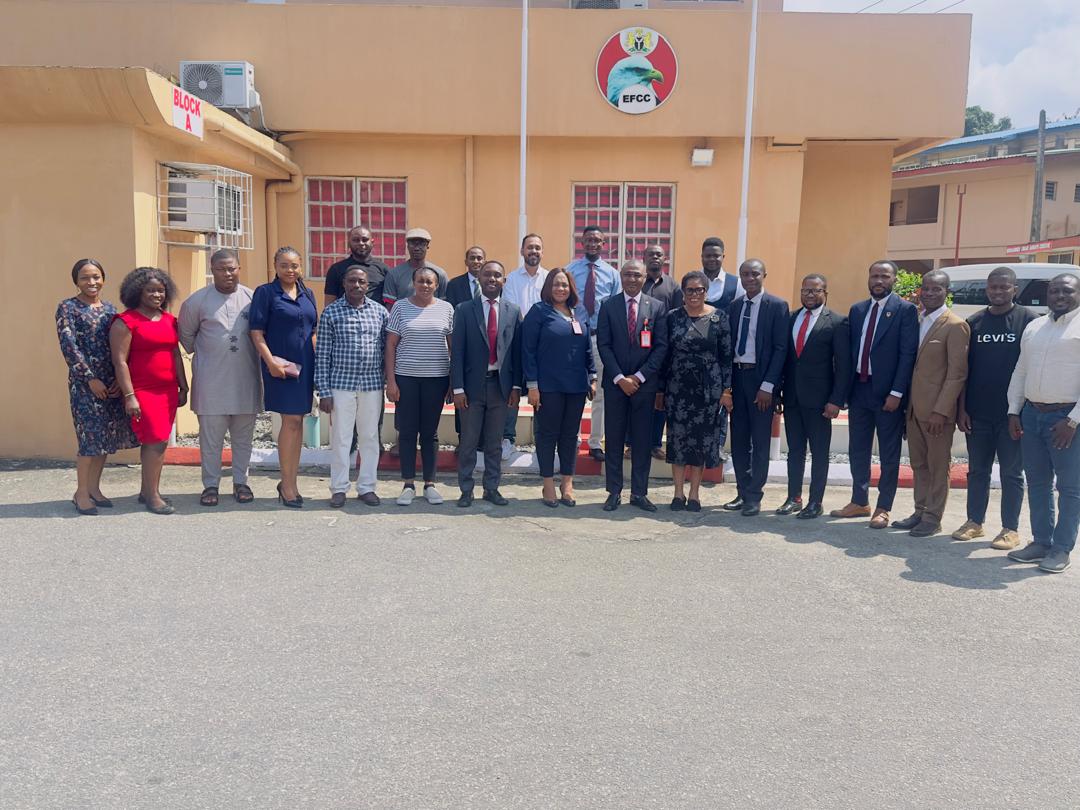
The Economic and Financial Crimes Commission (EFCC) has called on Designated Non-Financial Businesses and Professions (DNFBPs) to ensure full compliance with the provisions of the Money Laundering (Prevention and Prohibition) Act 2022. This message was delivered by the EFCC’s acting Director, Lagos Directorate, Michael T. Wetkaz, during a sensitization program organized by the Special Control Unit Against Money Laundering (SCUML) on September 4, 2024.
During the one-day event, Wetkaz emphasized the global urgency to curtail terrorism and financial crimes, urging DNFBPs to tighten their operations and avoid providing a platform for criminal activities. “Financial institutions have largely been regulated, and terrorism remains a global concern,” he stated. “It’s crucial that businesses like yours don’t inadvertently support criminal elements. If these illegal activities pass through your businesses, it worsens the security challenges in the country.”
Wetkaz stressed the importance of collaborative efforts, reminding participants of their obligation to report suspicious activities. “We’re here to ensure you know what to do and that you don’t fall on the wrong side of the law. Together, we can make it tough for bad actors to operate and ensure a safer country for us all,” he urged.
Aminu Ahmed, Assistant Commander of the EFCC, further clarified the legal responsibilities of DNFBPs, highlighting that businesses must report currency transactions exceeding ₦5 million for individuals and ₦10 million for corporate bodies. He also emphasized the necessity of appointing a compliance officer and adhering to the Anti-Money Laundering/Combating the Financing of Terrorism (AML/CFT) regulations.
Adding to the discourse, Folasade Oluwasanya, also an Assistant Commander of the EFCC, provided insights on financial sanctions and the obligations surrounding Politically Exposed Persons (PEPs). The training focused on key areas such as beneficial ownership and targeted financial sanctions, aiming to arm DNFBPs with the knowledge needed to identify and combat financial crimes.
The EFCC reiterated that such initiatives are part of ongoing efforts to build a crime-free business environment in Nigeria, while also contributing to the broader fight against money laundering and terrorism financing.
 PIONEER NEWS