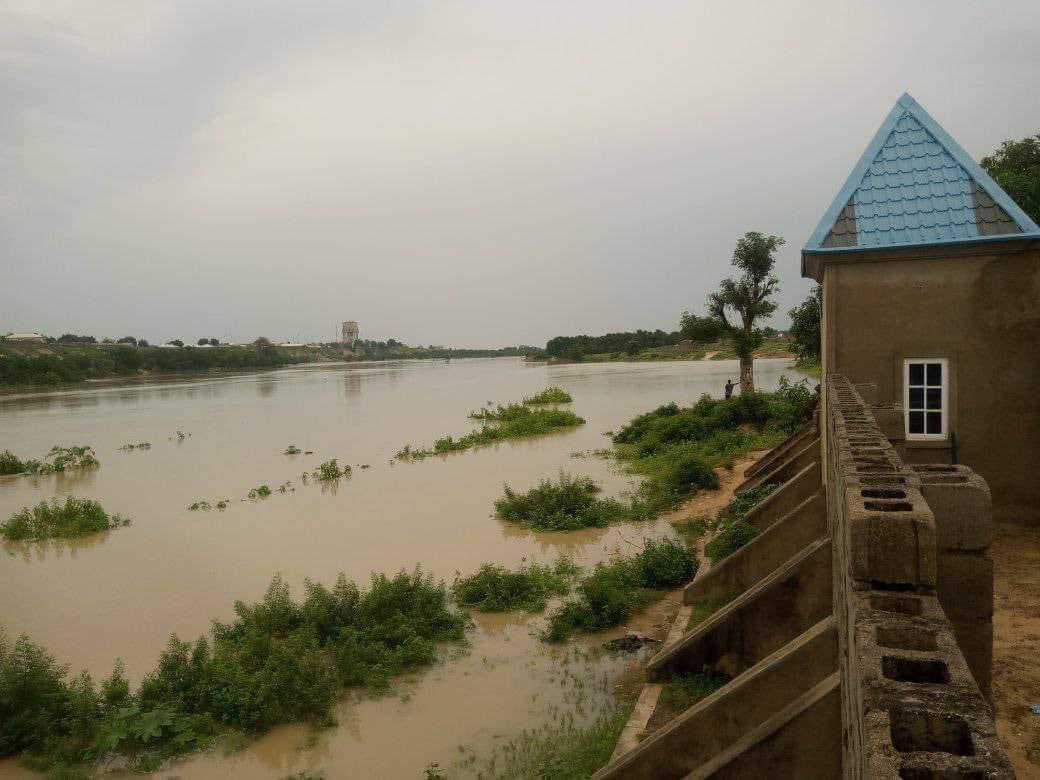
Renowned security analyst and counterinsurgency expert, Zagazola Makama, has raised alarm over a devastating humanitarian crisis in Borno State. In a dramatic post shared on his official X (formerly Twitter) handle, Makama revealed that heavy rains have led to the catastrophic collapse of the Alao Dam, triggering widespread destruction and displacing thousands of residents.

According to Makama, the dam’s failure has caused massive flooding in several communities, submerging farmland and wreaking havoc on local livelihoods. Families have been forced to flee their homes as rising waters consume everything in their path. “The collapse has damaged surrounding farmland and communities, forcing people to flee their homes in search of safety,” Makama reported.

The hardest-hit areas include Dalori, Gwange, Sabon Gari, and the vicinity around Lagos Bridge, where water levels have risen to unprecedented heights, further threatening already vulnerable communities.
Makama’s revelation paints a grim picture of the situation on the ground, as residents scramble to escape the advancing floodwaters with limited access to relief or emergency assistance. The loss of farmland and homes adds to the plight of those affected, many of whom rely on agriculture for their livelihoods. With crops destroyed and infrastructure battered, the future for these communities appears uncertain.

The renowned security expert underscored the urgent need for government intervention, calling on relevant authorities to act swiftly in providing emergency aid and rehabilitation to the affected areas. “Swift action is critical,” Makama urged, stressing that delays could exacerbate the already dire conditions faced by displaced families.
As the floodwaters continue to rise, attention is now focused on how quickly federal and state authorities can mobilize resources to prevent further devastation. The Alao Dam collapse stands as a stark reminder of the vulnerabilities posed by climate change and aging infrastructure, with lives and livelihoods hanging in the balance.
The collapse has not only left a trail of destruction but also highlighted the pressing need for disaster preparedness and more robust infrastructure to withstand the growing threat of extreme weather events in Nigeria.
 PIONEER NEWS