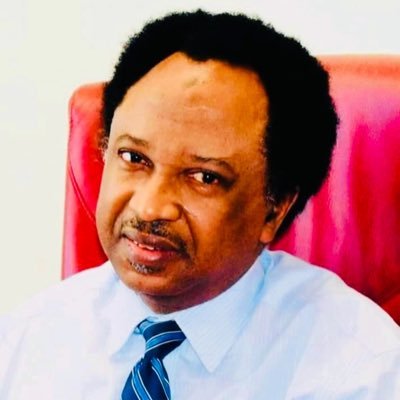
Renowned human rights activist and former Senator, Shehu Sani, has once again stirred the political waters with a powerful message that resonates deeply with the current state of governance in Nigeria. Taking to his official X handle, Sani highlighted a glaring contradiction that plagues the nation’s political landscape—a preference for tribal loyalty over competence in political appointments.
In a thought-provoking post that has sparked widespread discussion, Senator Sani wrote: “People want a competent pilot, a competent doctor, a competent engineer, a competent teacher, and a competent driver…but when it comes to political appointments, they want someone from their tribe, even if he or she is incompetent.”
With this bold statement, Sani calls out the hypocrisy that has long undermined the effectiveness of political leadership in Nigeria. His words strike at the heart of a systemic issue where the meritocracy expected in critical professional fields is often disregarded when it comes to political positions. Instead of choosing leaders based on their skills, experience, and ability to deliver, there is a troubling tendency to prioritize ethnic and tribal affiliations, even at the expense of good governance.
Sani’s post is not just a critique; it’s a wake-up call. It challenges Nigerians to reflect on the double standards that govern their expectations of leadership in different sectors. While there is a universal demand for competence in roles that directly impact daily lives—such as those of pilots, doctors, and engineers—the same standard is alarmingly overlooked when appointing individuals who shape the nation’s policies and future.
The former Senator’s message underscores a crucial point: the need for a paradigm shift in how political appointments are made. Competence, not tribal affiliation, should be the foremost criterion for selecting those who will hold positions of power and influence. The consequences of prioritizing tribe over talent are far-reaching, often leading to ineffective governance, corruption, and a stagnation in national progress.
As the conversation around Sani’s post gains momentum, it forces a broader reflection on the values that should guide political appointments in Nigeria. Will the nation continue to be shackled by the chains of tribalism, or will it rise to the challenge of embracing competence as the cornerstone of leadership? Senator Sani’s call to action serves as a powerful reminder that the choice lies in the hands of the people. The question is—are they ready to demand better?
 PIONEER NEWS