By Philip Adams
In the ever-shifting landscape of political power, there is a disturbing trend where some politicians, intoxicated by their temporary authority, lose sight of the fundamental respect owed to traditional rulers. These politicians, emboldened by their positions, speak to these revered custodians of our cultural heritage with an arrogance that undermines the very fabric of our society. Yet, they must remember that power is fleeting, and the day of reckoning always comes for those who fail to honor the institutions that have long guided our communities.
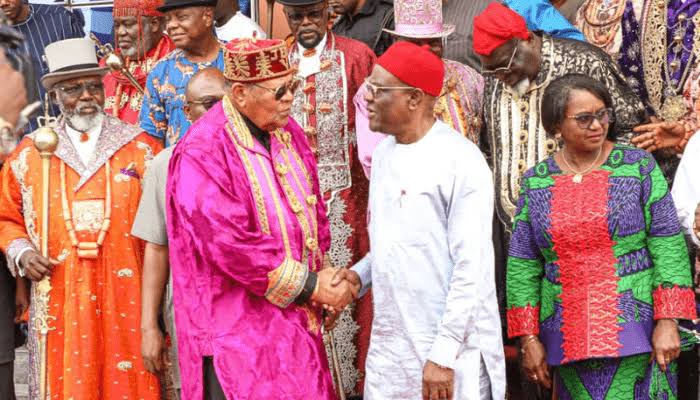
Traditional rulers, with their deep-rooted influence and historical significance, are more than mere figureheads. They are the guardians of our traditions, the moral compasses that have steered our societies through generations. However, when a traditional ruler, who is expected to remain apolitical, is perceived to be aligning with the opposition, it presents a delicate challenge. As a politician, it is crucial to handle such situations with the utmost care and respect, recognizing the importance of these leaders in the societal hierarchy.
The power vested in political office is not a license to publicly humiliate or disgrace these traditional leaders. When a politician suspects that a ruler is engaging in political activities or taking sides with the opposition, the appropriate course of action is not to berate or embarrass them before the public. Such actions only serve to erode the respect and authority of both the politician and the traditional ruler, destabilizing the delicate balance that maintains order in our society.
Instead, politicians should approach these sensitive matters with discretion and diplomacy. A private conversation—a quiet warning given in confidence—demonstrates not only respect for the ruler’s position but also an understanding of the broader implications of such conflicts. It is a sign of maturity and wisdom in leadership to address these issues behind closed doors, ensuring that the dignity of the traditional institution remains intact.
Publicly chastising a traditional ruler not only damages the relationship between the politician and the ruler but also sows discord within the community. The people who look up to these leaders are watching, and when they see their traditional rulers disrespected, it diminishes the collective respect for authority in all its forms. This can lead to a breakdown in societal order, something no politician should wish to see.
Moreover, the arrogance of power can lead politicians to believe they can remove traditional rulers at will, forgetting that these leaders have deep roots in their communities that transcend political cycles. Such politicians often overlook the fact that their time in office is limited, while the influence of traditional rulers is enduring. The day will come when they must leave their positions of power, and the respect—or contempt—they showed to these institutions will be remembered.
It is essential for politicians to understand that their authority is temporary, and they must wield it with humility and wisdom. Respect for traditional institutions must be reciprocal; it cannot be demanded without being given in return. By handling conflicts discreetly and maintaining the dignity of traditional rulers, politicians not only preserve the respect owed to these leaders but also safeguard their own legacy.
In conclusion, politicians must exercise caution and restraint when dealing with traditional rulers, particularly in matters of perceived political involvement. Public displays of disrespect serve no one and can have long-lasting negative effects on the social fabric. Instead, let wisdom guide their actions, with private, respectful dialogue as the cornerstone of resolving conflicts. For in the end, it is the mutual respect between politicians and traditional rulers that sustains the strength and unity of our communities.
 PIONEER NEWS