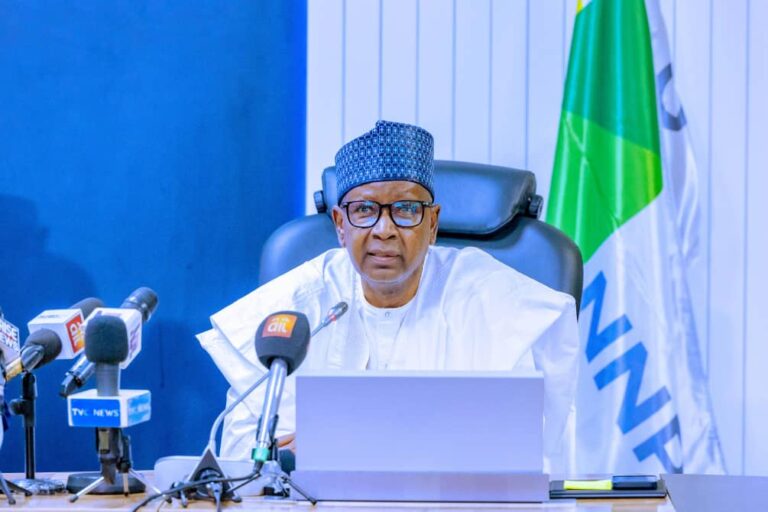
The Nigerian National Petroleum Company Limited (NNPC Ltd.) has firmly denied claims of paying fuel subsidies over the past nine months, setting the record straight amidst growing speculation. This revelation was highlighted by the Special Adviser on Information and Strategy to President Tinubu, Bayo Onanuga, who shared the news on his official social media platform, X, citing a report by the News Agency of Nigeria (NAN).
In a detailed explanation provided by the Chief Financial Officer of NNPC Ltd., Alhaji Umar Ajiya, during a briefing in Abuja on Monday, he emphasized that the company has not disbursed any funds as subsidies to marketers or other entities. According to Ajiya, what has been misunderstood as a subsidy is, in fact, a shortfall between the landing cost of Premium Motor Spirit (PMS) and the price set by the government.
“For the past eight to nine months, NNPC Ltd. has not paid a single kobo to anyone in the name of subsidy,” Ajiya clarified. “No marketer has received any money from us under that guise. What we are dealing with is a situation where we import PMS at a specific cost, and the government mandates us to sell it at a significantly lower price. The difference between these costs is a shortfall, which is reconciled directly between the Federation and NNPC Ltd.”
Ajiya further elaborated that this process does not involve any direct financial transactions with marketers, dismissing the notion that the company has been involved in any form of subsidy distribution.
The company’s financial operations, particularly in the downstream sector, have remained transparent and credit-driven. Ajiya pointed out that credit lines are a common practice in the global commercial landscape, and NNPC Ltd. has historically engaged in open credit agreements with PMS suppliers.
Echoing Ajiya’s sentiments, Dapi Segun, the Executive Vice President of Downstream at NNPC Ltd., praised the robust relationships the company has cultivated with its suppliers over the years. Segun noted that these relationships have been vital in ensuring a steady supply of PMS across Nigeria, despite the financial complexities involved.
“Regarding our outstanding obligations to suppliers, the figures circulating are grossly exaggerated,” Segun said. “The actual figure is significantly lower than the reported $6.8 billion. What is crucial is maintaining our credibility with suppliers by honoring our payment agreements, which we have consistently done.”
Segun also highlighted the dynamic nature of the company’s financial obligations, explaining that the outstanding amount fluctuates based on ongoing transactions. “It’s a fluid situation,” he explained. “When we make payments, the debt decreases, and as we receive new supplies, it increases. The key focus for NNPC Ltd. is to ensure the uninterrupted availability of PMS across the nation.”
NNPC Ltd.’s latest clarifications are a bid to dispel ongoing misconceptions about its role in fuel pricing, reiterating its commitment to transparency and accountability in its operations. As the company continues to navigate the complexities of the global oil market, it remains steadfast in its mission to provide reliable and affordable energy to the Nigerian people.
 PIONEER NEWS