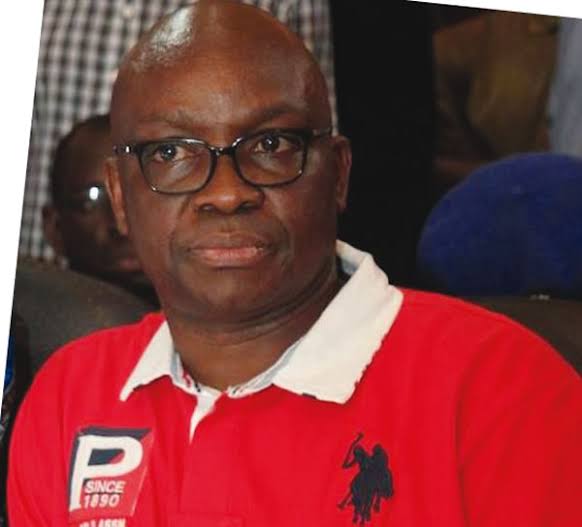
In a bold statement, former Ekiti State Governor Ayo Fayose declared that despite the recent Supreme Court ruling affirming local governments’ right to receive monthly allocations directly from the federation account, council chairpersons will still remain answerable to their state governors.
Speaking on Sunday’s edition of Channels Television, Fayose emphasized that no one can be elected as a council chairman in Nigeria without the support and backing of the state governor. He argued that given Nigeria’s political landscape, it would be futile for anyone to assume they could be elected as a council chairman under an opposition party within any state.
“Anyone thinking they can operate as a council chairman without the governor’s support is wasting their time,” Fayose stated emphatically.
Last Thursday, the Supreme Court delivered a landmark judgment mandating the Nigerian Government to directly pay funds allocated to Local Governments to their respective Local Government Areas, managed by democratically elected officials. Justice Emmanuel Agim, in his ruling, declared it unconstitutional for state governments to withhold and utilize allocations meant for local government areas, as mandated by Section 162(3) of the Constitution. This decision aims to ensure local governments receive their rightful allocations, promoting decentralization and grassroots development.
Despite this, Fayose remained firm in his stance. “I am not a lawyer; I am a politician and, by God’s grace, today an elder statesman. While I believe no government should take local government funds, you cannot separate a council chairman from the governor. Anyone suggesting otherwise is deluded,” he said.
Fayose based his argument on the statutory power granted to state Houses of Assembly to regulate the administrative functions of local government councils. He noted, “The House of Assembly of every state controls and checkmates the activities of local governments. When I was governor, I received money from Abuja, but it was managed by local officials, not politicians. The local government commissioner, representing the governor, oversees these funds. So, any council chairman who disrespects their governor will face the consequences from the House of Assembly. You cannot be a council chairman without the governor’s endorsement.”
Fayose’s comments underline the entrenched political realities that may hinder the practical implementation of the Supreme Court’s judgment, highlighting the continued influence and control of state governors over local government affairs.
 PIONEER NEWS