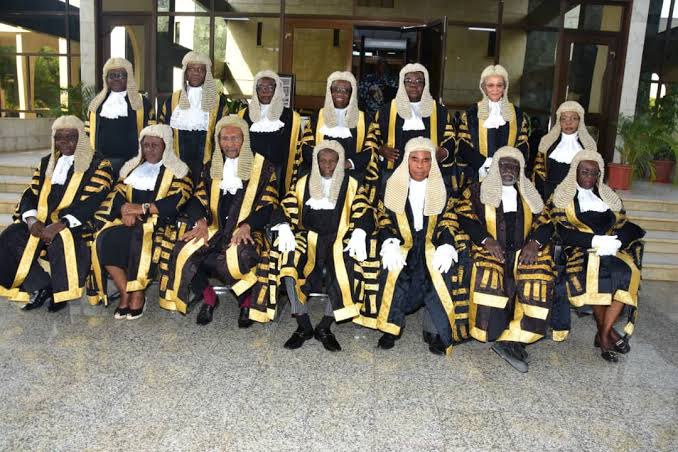
The Supreme Court of Nigeria has scheduled a pivotal ruling for Thursday, July 11, concerning a suit advocating for full autonomy for the country’s 774 local governments. This case, initiated by the Nigerian federal government against the governors of the 36 states, seeks to redefine the administrative landscape of local governance in Nigeria.
The suit, identified as SC/CV/343/2024, was brought forward by the federal government, represented by the Attorney General of the Federation and Minister of Justice, Lateef Fagbemi. It seeks to establish local government autonomy by preventing state governors from dissolving democratically elected councils and replacing them with caretaker committees, a practice that has become alarmingly routine.
The federal government’s suit is anchored on 27 grounds, emphasizing that the Nigerian Constitution recognizes federal, state, and local governments as three distinct tiers. The core argument is that each tier should receive funds directly from the Federation Account, as stipulated by the Constitution. The suit argues that the current practice of state governors controlling these funds and undermining elected local governments is a blatant violation of the Constitution.
The originating summons states, “The Constitution of Nigeria mandates a democratically elected local government system, and any other form of governance at this level is unconstitutional. Despite this clear directive, governors have consistently failed to establish democratically elected local councils, without any declared state of emergency to justify such actions.”
The federal government is requesting the Supreme Court to:
Confirm that local governments must be democratically elected.
Prohibit governors from arbitrarily dissolving elected councils.
Authorize the direct transfer of funds from the Federation Account to local governments.
The federal government contends that the governors’ refusal to uphold a democratically elected local government system constitutes a deliberate subversion of the 1999 Constitution, which they and the President have sworn to uphold.
A favorable ruling for the federal government could herald a new era of local governance in Nigeria, ensuring that local governments operate independently and with direct access to necessary funds. This would not only strengthen democratic institutions at the grassroots level but also enhance accountability and service delivery to the Nigerian populace.
As the nation anticipates the Supreme Court’s judgment, this case stands as a crucial test of the Nigerian judiciary’s role in upholding constitutional mandates and reinforcing democratic principles across all tiers of government.
The upcoming Supreme Court ruling on local government autonomy represents a watershed moment in Nigeria’s democratic evolution. The decision will potentially set a precedent for the balance of power between state and local governments, with far-reaching implications for governance and democracy in the country. The nation watches keenly as the apex court prepares to deliver its verdict on this critical issue.
 PIONEER NEWS