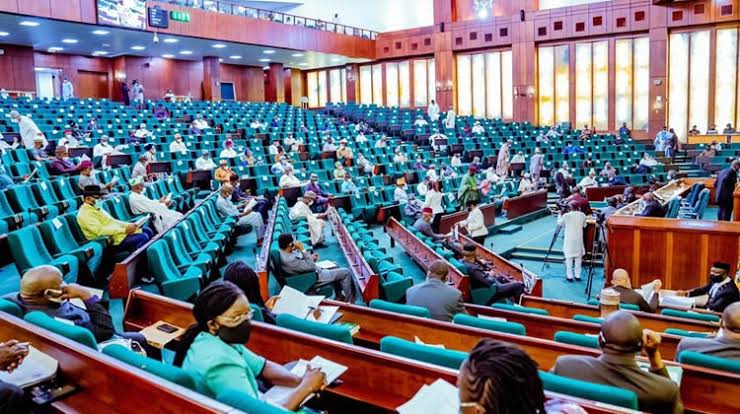
In a historic move, the House of Representatives has progressed a landmark bill that seeks to reserve 74 additional seats for women in the National Assembly. This bill, which passed its second reading on Tuesday, promises to significantly alter the political landscape of Nigeria.
Bill Details and Sponsorship
Spearheaded by Deputy Speaker Benjamin Kalu and 12 co-sponsors, the bill aims to amend Sections 48, 49, 71, and 117 of the 1999 Constitution. It proposes to create “Special seats” exclusively for women in both the Senate and House of Representatives, covering each state of the federation and the Federal Capital Territory (FCT). If enacted, the changes will be effective after the current National Assembly’s term ends and will be subject to review every 16 years.
The bill also seeks to modify Section 91 to ensure three special seats for women in each State House of Assembly. This provision underscores the commitment to enhancing female representation at both national and sub-national levels.
Debate and Support
Leading the debate, co-sponsor Joshua Gana, representing Lavun/Mokwa/Edati Federal Constituency in Niger State, highlighted the profound gender imbalance in the National Assembly. He emphasized that the bill is grounded in the principle of equitable representation, aiming to empower women and ensure their active contribution to legislative processes and national development.
Gana lamented the alarmingly low representation of women in the legislature, citing that in the 7th, 8th, and 9th Assemblies, women accounted for only 6.4%, 6.1%, and 2.7% of the Senate seats respectively. The House of Representatives fared similarly with 6.4%, 3.05%, and 4.7% during the same periods.
“These statistics underscore the urgent need for proactive measures to ensure equitable representation and amplify the voices of women in our legislative houses,” Gana asserted. He further noted that Nigeria ranks among the lowest globally in terms of women’s representation in parliament, pointing to successful examples of affirmative action in countries like Rwanda and Andorra.
Broad Consensus and Opposition
House spokesman Akin Rotimi acknowledged the broad consensus for more women representation in parliament, while Minority Leader Kingsley Chinda stressed the necessity of correcting the deficiency. Kelechi Nwogu from Rivers echoed this sentiment, advocating for better opportunities for women in politics.
However, the bill faced opposition from several lawmakers. Ghali Tijani from Kano argued that political parties should instead deploy mechanisms to improve women’s participation, rather than reserving special seats. Olamijuwonlo Alao Akala from Oyo, Patrick Umoh from Akwa Ibom, and Billy Osawaru from Edo also expressed concerns, suggesting that the bill might conflict with constitutional provisions.
The passage of this bill marks a significant step towards addressing gender disparity in Nigeria’s political sphere. As the bill progresses through further readings and potential amendments, the nation watches with anticipation, hopeful for a future where women’s voices resonate more powerfully in the corridors of power.
 PIONEER NEWS