According to the American-born Sociologist Joseph Sore, his intellectual discourse on the power of privilege examines the nexus between social class and admissions. He uses the glaring classism in the United States of America as an example and proved his assertion without any whiff of askance in which to get admission into America’s top colleges and have a good job in the system despite an impressive academic performance. This remains a darn fantasy due to the lackadaisical adherence to meritocracy or how its impulse was much weaker than it is commonly believed. Acceptance in prestigious colleges or getting good jobs remains beyond the reach of most students and the less privileged working class, except those from high-income professional families. It was only for the elites, their kiths, and kins, or those they recommended.
Joseph Sore’s example of American classism is an undeniable aphorism that conforms with today’s realities of the Nigerian State.
The first republic Nigerian elites who patriotically and selflessly laid the foundation for developing the country after fighting and securing our independence from the illegal British domination have come and gone like lightning, leaving behind tears, agony, and frustrations.
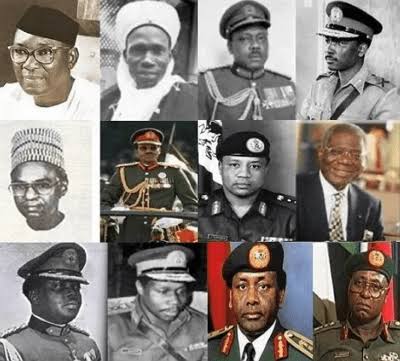
The untimely evanescent of these great leaders of blessed memory has left the herd of unsuspecting innocent Nigerians with no alternative than to face the reality of a doomy and charade of adverse leadership style, which is full of blustering and virulence to the health of Nigerian development. It is very unfortunate that Nigerian leadership had fallen into the hands of the wrong leaders who promised to be good babysitters to engineer and guide the nascent developing toddler to maturity, but ended up as a bunch of gluttons with their hoaxes and evil tendencies.
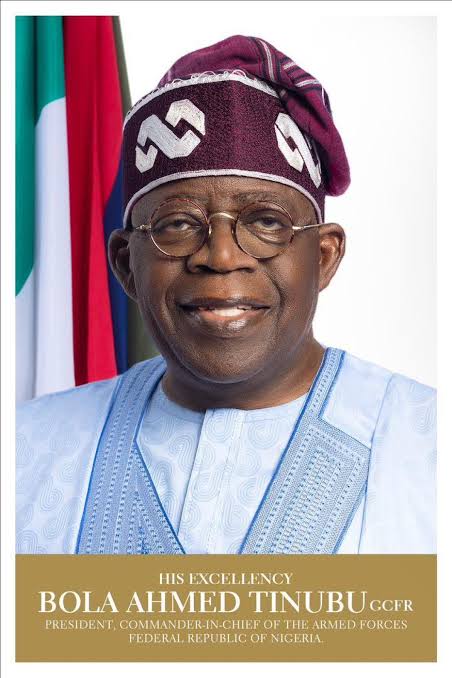
It is prevalent today in Nigeria that those who met the academic qualifications but did not meet the social class expectation are not being considered. Nigerian political elites due to their clannish selfish nature, have isolated themselves from the masses who have good intentions for the country. They do everything possible within their reach to ensure that non-elites do not join their membership because they have bad intentions toward the development of the country. They reproduce themselves on an individual and selective basis; their recruitment to the corridors of power is often parochial and biased. A cursory look at the immediate past administration with its most reiterated change mantra during its campaign period was highly alacritous, cherished, and supported by Nigerians who think that their messiah has finally arrived to salvage them from the shackles and manacles of poverty biting the entire country. But alas, how are Nigerians faring today? The same administration which survived on callousness, incessant exhibition of vendetta, smear campaign of anti-corruption war, the height of self-centeredness, egregiousness, ethnocentric/religious bias in terms of political appointments and social class expectations without merit which rendered the system tenuously to the state of comatose, have contributed immensely to the victory of the present administration of Tinubu/Kasheem which the veracity is been challenged by the two popular opposition party PDP/LP in the election tribunal court. Nigerian political office holders especially the National Assembly members and the executive arm have always failed the masses with their show of failure and incompetence on matters that bother the general public.

It is unfortunate that their inaction and selfish disposition which serves as a hindrance to service delivery has ignited and buoeyed the present odious brawl within them. The glaring evince of the incompetency exhibited by our present political leaders has exposed their leadership weakness and failure. This persistent leadership failure has thrown the country onto choppy waters that the Nigerian democracy has sailed on and no one can predict how it will finally quay or berth.
For how long will Nigerians remain in the throes and trajectory of deep underdevelopment?
The frantic efforts to ensure free and fair elections which may usher in patriotic ones have always failed. The cause of this is not farfetched: it is basically because the country has been hijacked by a stratum of plutocrats and timocrats who happens to be ubiquitous in any administration that comes into power, be it a Military regime or democracy. A smooth democratic government which is a doorway to the development of a given nation becomes effective when it’s directed and managed by a stratum of a selfless minority group that is imbued with organizational skills, knowledge, and drive. But it is worrisome and blimey when the state’s affairs are run totally by deadhead plutocrats and political machines; a class that uses the resources of the country to consolidate their political and economic interests rather than better the lives of the citizenry.
The degree and high rate of their ill-accumulated wealth In Nigerian society have given them the privilege to circulate the power within their cartel, hegemony, and oligarchy which gives them dolce vita and buzz to carve out their niche by selfishly monopolizing all the sources of power. Nigeria as supposedly the pride and giant of Africa has corroded its image before the comity of nations due to the height of corrupt practices by its leadership and has become pernicious to the people that are supposed to be taken care of.
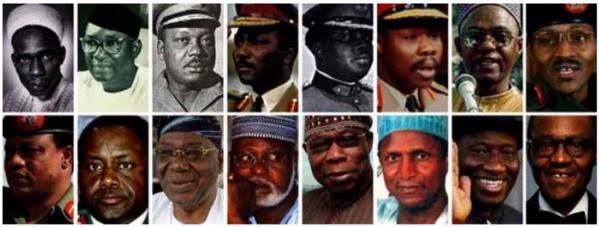
Nigerian powerful elites by extension reinforcesreinforcealize Lord Acton’s famous aphorism that, “all power corrupts and absolute power corrupts absolutely”. Money power corrupts and ambition backed by money power both corrupts and blinds, according to Eskor Toyo.
Every nation has its peculiarities, problems, and solutions. It is expected that Nigeria’s present leadership should emulate the altruistic and patriotic lives of the past leaders of blessed memories like Dr. Nnamdi Azikwe, Alh. Abubakar Tafawa Balewa, Obafemi Awolowo, and Sir Ahmadu Bello, to mention but a few. They should equally take a cue from the developed nations about models of development. Many wealthy elites in developed countries or democracies in terms of investments consider their own countries first before any other country. For instance, investors like Warren Buffett of the USA, William Henry (Bill) Gates- an American business magnate and investor, Ted Tuner-an American and the founder of Cable News Network (CNN), Carlos Slim Helu of Mexico, Bernard Arnault of France, Larry Ellison of USA, Lakshmi Mittal of India, Amancio Ortega of Spain, Eike Batista of Brazil, Mukesh Ambani of India are all top 10 wealthiest men in the world and investors that contributed maximally in the economic development of the world beginning from their countries. It is a known fact that these wealthy individuals do a lot to develop their societies via donating to charities, heavy taxation as well as the establishment of foundations that fund education. But this is not the case with Nigerian wealthy men. However, there are quite several Nigerian politicians, technocrats, and bureaucrats though in the minority, who have indeed contributed in no small measure towards the economic and political development of the country by investing largely in the country.

The likes of Aliko Dangote (Dangote Group), Cletus Ibeto (Ibeto Group), Alh. Mai Deribe (Mai & Sons Ltd), Chief Olusegun Obasanjo, and Alh. Atiku Abubakar falls under this category.
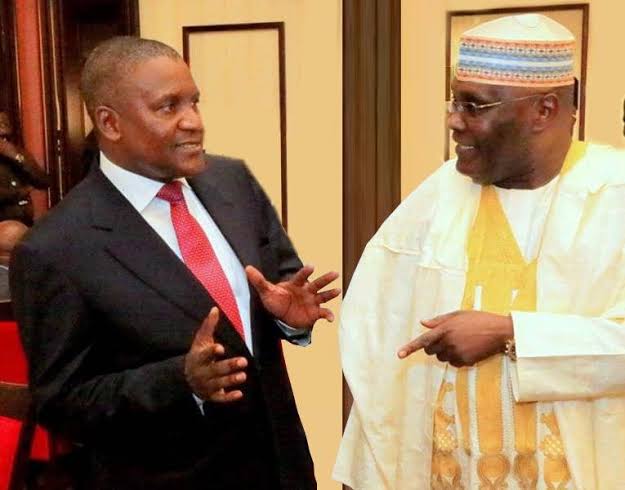
Nigerian Millionaires and billionaires should rethink and re-invest their wealth in their own country, where some of them have looted from rather than investing in other countries that have already attained optimal advancement in various spheres of life. It is high time for Nigerians to rise to the occasion and stop the views, sentiments, religious bias, and dominance of the elite class that is often worshipped and recognized.
The opinion of the masses or the ‘representatives’ of the masses are always taken with a pinch of salt because they do not have the financial clout or power to influence and in some cases, counter some policies of the government that seem not to have a human face.
 PIONEER NEWS