It is acceptable phenomenon that the growing political awareness across the country has put so much pressure on both politicians and the people they govern.
Above all, the scope of the work of media has thus been expanded to focus on promises of politicians to the people, explaining the concrete outcomes of such promises so that the electorates do not get hoodwinked, and the politicians hide under false impressions. The 2nd Republic began in 1999 with mixed feelings because of fears that the incessant disruption of the political process by the military in the past would happen again. However, with the evince of democratic process for almost 20 years, with different crop of political leaders who come and go after the expiration of their tenures, there have been a whiff of interesting developments showing some positive changes unlike in the days of military junta.
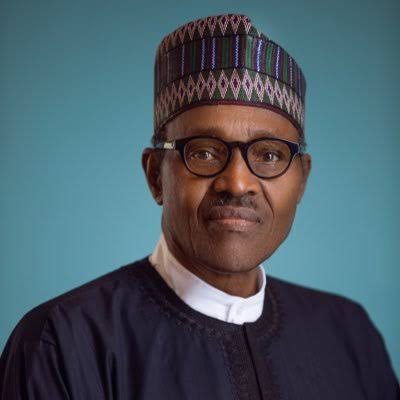
Major General Buhari came to national limelight in 1983 when he became the Head of State after the successful military coup d’état that overthrew civilian President Shehu Shagari on 31 December 1983. He ruled Nigeria from January 1984 until August 1985, before his regime was toppled by another coup. His reign is ever remembered for a vigorous campaign against indiscipline and corruption, but tainted with human right abuses. With the return to democracy in 1999, General Buhari participated in several presidential elections and lost, but eventually with the help of their party slogan change mantra (SAK), he emerged victorious in the 28 March 2015 Presidential elections. With the high hope that Nigerian’s have on Buhari, the country was awash with optimism that he will urgently tackle several challenges that have hindered economic prosperity, sustainable security and overall national development in Nigeria, but it is unfortunate that nothing has done to improve the lives of Nigerian’s. The challenges of insecurity today in Nigeria has become the order of the day as innocent people were slaughter every day in their own houses and communities without any help from the government of the day. Despite government claims to the contrary, insecurity across the country appears to be spreading like wild fire. The narrative that Boko Haram insurgents in the North East have been ‘technically defeated’ now appears propaganda as fatalities continue to be recorded from attacks. In addition, other bandits continue to cause mayhem through countless kidnapping and massacres across the country. An independent researcher, Dr. Jose Luis Bazan, reported that an estimated 2,539 persons have been killed from 654 attacks between 2017 and 2020. In 2019, Nigeria was ranked 3rd below Afghanistan and Iraq out of 138 countries in the Global Terrorism index and is said to be 14th most fragile in the world and 9th in Africa, according to the fragile States index. Unsurprisingly, in the same year the country was also ranked 148th out of 163 countries in the Global Peace Index, far below former war-ravaged countries like Sierra Leone (52), Liberia (59) and Rwanda (79). In some previous past administrations many breadwinners that were able to feed their families three times a day could not afford to do that today as the prices of basic food items doubled in the past few months and their source of income dwindled. In his election manifesto, President Buhari promises to ensure the equitable distribution of nation’s wealth and close the gap between different classes, has he done that? He had also committed to lifting 100 million Nigerians out of poverty in the next ten years, can he explain to Nigerians on how he intends to achieve this since an average Nigerians are getting poorer by the day.
Looking at how things have gone wrong in the country from bad to worse, even within the President Buhari’s own party, many people who worked for his victory now complain openly that the mission that brought them to power might have been willfully abandoned. The on-going peaceful protest across the country show how tired people are with this unreliable government. Frustration and discontent are fast spreading among the populace who have already been negatively impacted by the adverse economic consequences. It is pertinent to note that some APC office political holders blamed the pandemic for the sudden economic downturn that led to the fluctuation of oil prices and necessitated the deregulation that seeks to permanently remove the costly and opaque subsidy regime. The larger populace now doubts the sincerity of “MAI GASKIYA” (BABA BUHARI) and might have lost confidence in him who was voted in under the mantra of change. Thus declining levels of trust in government is unsettling which, according to the Organization for Economic Cooperation and Development (OECD), compromises the willingness of citizens and business to respond to public policies- essential for economic prosperity.
BY Mohammed Dahiru
 PIONEER NEWS